At a glance
- On fatigued or low-appetite days, no-cook staples (Greek yogurt, cottage cheese, hard-boiled eggs, canned fish, deli turkey) deliver high protein in 3 to 6 minutes.
- FDA and EPA list salmon, shrimp, and canned light tuna as 'Best Choices' for lower mercury.
- Over 70% of U.S. sodium comes from packaged and prepared foods; use the FDA 5%/20% Daily Value shortcut when picking deli meat, cheese, and canned fish.
- Follow FoodSafety.gov cold-storage limits: 3–5 days for opened deli meat, 1 week for hard-boiled eggs, and 3–4 days for prepared tuna or chicken salads.
Assembly counts as cooking. Opening a tub of cottage cheese, rolling three slices of turkey around cucumber, or flaking a pouch of salmon is a real meal.
Some days the barrier is not knowing what to eat — it is having zero energy left to turn on a burner, chop an onion, or scrub a skillet. When you are tired and facing a low-appetite day on a GLP-1 medication, the fastest way to accidentally skip protein altogether is thinking dinner only counts if it involves a stove.
It does not. The 2025 joint clinical advisory specifically highlights compact, nutrient-dense proteins — fish, eggs, Greek yogurt, cottage cheese, lean poultry, beans, and nuts or seed spreads — that fit right into 5-minute, zero-cook assembly plates [1].
No-cook picks by speed (3 minutes vs. 5–6 minutes)
Keep both tiers stocked so you can match the exact amount of energy you have left tonight:
3-to-4-minute “open and eat” plates (cold, zero smell)
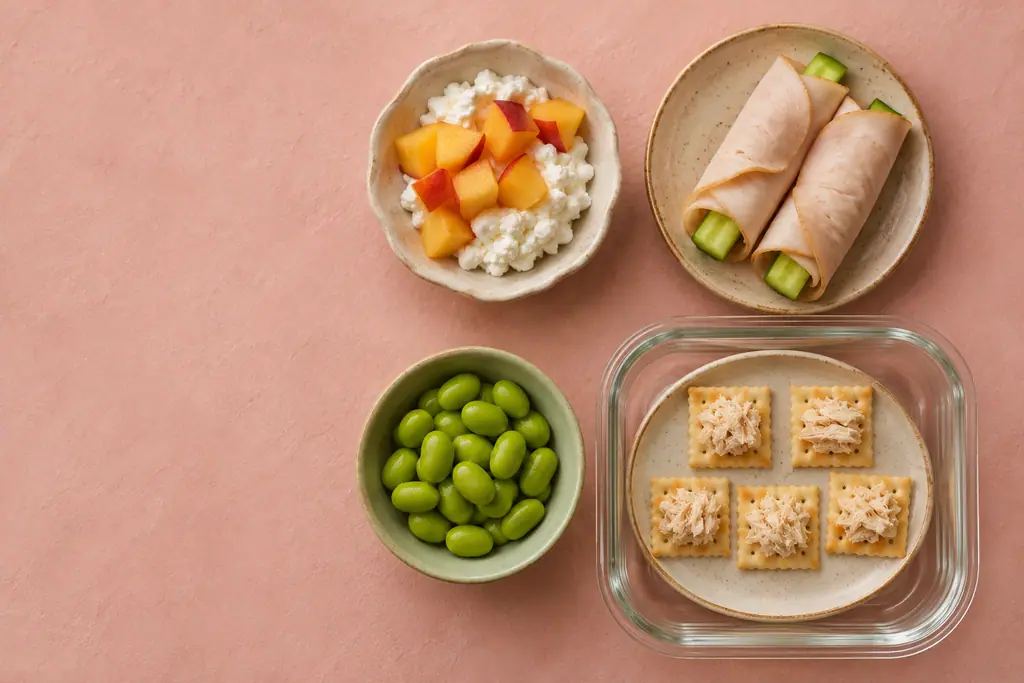
- Spoon-and-top dairy: Cottage cheese or plain Greek yogurt paired with sliced peaches, berries, applesauce, or nuts — like Cottage Cheese & Peaches.
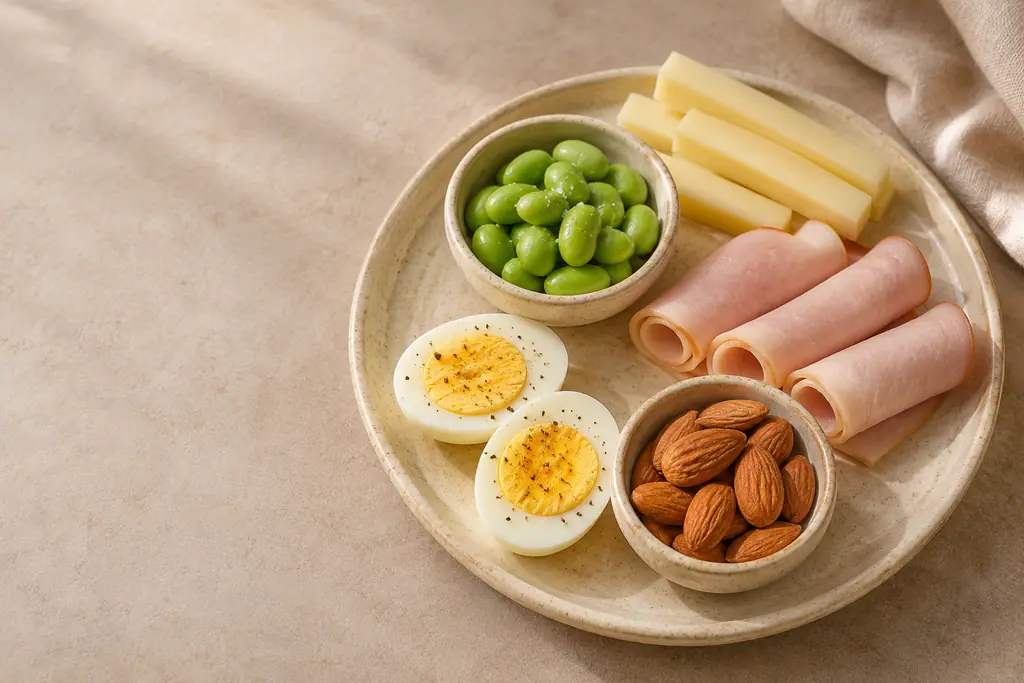
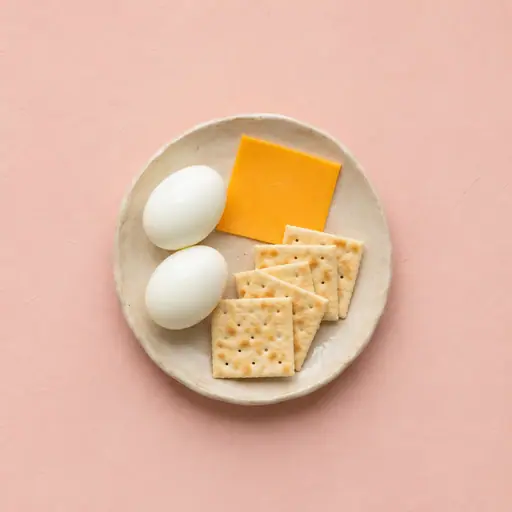
- Peel-and-slice snack plates: Pre-peeled hard-boiled eggs paired with thin cheddar and five saltines (Egg & Cheddar Snack Plate) give you calm, bland protein with almost zero odor.
5-to-6-minute “mix or roll” assemblies (still zero stove)
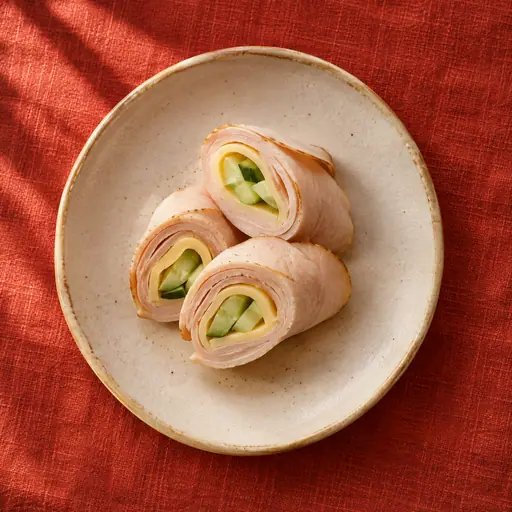
- Wrap-and-roll poultry: Spread hummus on deli turkey with crisp cucumber sticks (Turkey & Cucumber Roll-Ups).
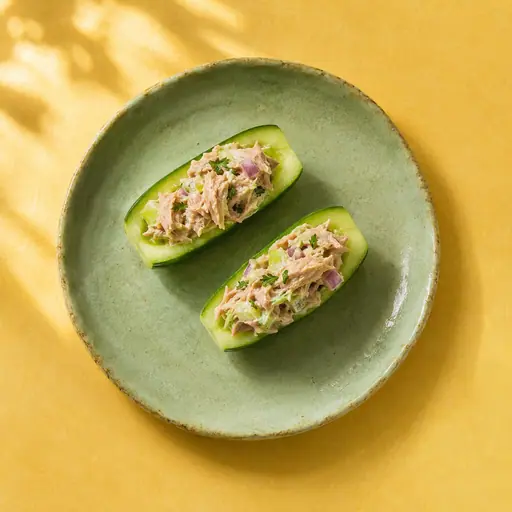
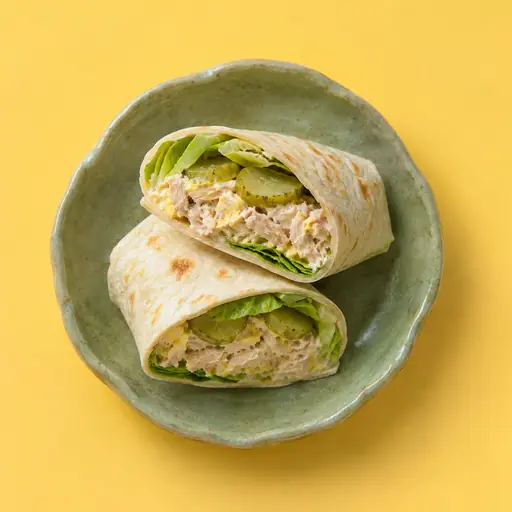
- Pantry fish upgrades: Mix canned light tuna with Greek yogurt and dill on cucumber rounds (Tuna & Cucumber Bites) or tucked into a quick Tuna Dill Pickle Mini Wrap.
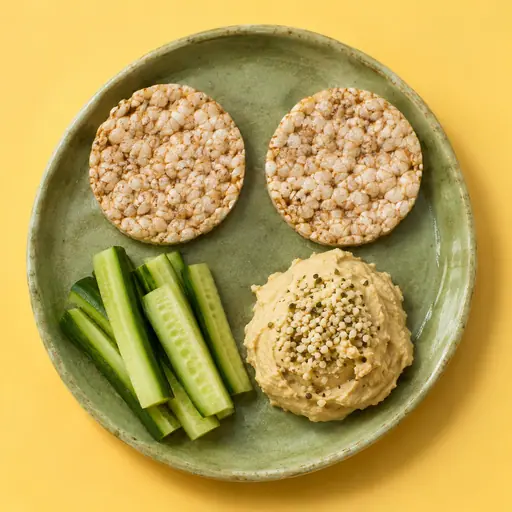
- Plant-based zero-cook plate: Pair hummus, hemp hearts, and crisp cucumbers (Hummus, Hemp & Cucumber Snack Plate) for steady protein plus fiber with zero cooking.
Your 6-item no-cook pantry & fridge kit
If you keep just these six staples on hand, you are always five minutes away from a real meal (browse all 51 no-cook options in our Recipes library):
- Single-serve plain Greek yogurt cups or a small tub of cottage cheese
- 4 to 6 hard-boiled eggs (already cooked in the fridge)
- Pouches or cans of light tuna and pink or sockeye salmon
- 1/4 to 1/3 lb of low-sodium deli turkey or pre-shredded rotisserie chicken
- One small tub of hummus + a bag of hemp seeds or pepitas
- Crisp no-prep vehicles: cucumber rounds, saltines, rice cakes, or small tortillas
On low-energy days, lower the friction until eating takes less effort than scrolling your phone.
Choosing canned fish wisely (FDA mercury check)
Pantry seafood is one of the highest-protein, lowest-effort staples in the grocery store. If you eat fish several times a week, the joint FDA and EPA Advice about Eating Fish groups seafood by mercury level [2]:
- “Best Choices” (lower mercury): Salmon, shrimp, and canned light tuna (including skipjack) are all on the FDA/EPA “Best Choices” list (2 to 3 servings a week recommended in their pregnancy/breastfeeding guide, with a standard adult serving about 4 ounces, roughly the size of your palm) [2].
- “Good Choices” (moderate mercury): Canned albacore (“white”) tuna sits in the “Good Choices” tier (limited to 1 serving a week in the FDA/EPA chart) [2].
Watch sodium on convenience shortcuts
No-cook convenience foods — deli turkey, cottage cheese, rotisserie chicken, canned beans, and crackers — can quietly stack up salt. The FDA notes that over 70% of dietary sodium comes from packaged and prepared foods, not the salt shaker at the table, and sets the Daily Value for sodium at less than 2,300 milligrams per day [3]. The 2025 joint clinical advisory also recommends keeping processed meats in moderation [1].
Three easy aisle swaps keep sodium comfortable without adding cooking time:
- Look for “low sodium” or “no salt added” labels on canned tuna, salmon, beans, and broth — or rinse canned beans under cold water before mashing.
- Check the % Daily Value on deli meats and cottage cheese: 5% DV or less per serving is low, while 20% DV or more is high [3].
- Rotate deli meat days with naturally lower-sodium no-cook anchors like plain Greek yogurt, hard-boiled eggs, or unsalted nuts and seeds.
Cold-plate food safety in 20 seconds
Because no-cook foods skip the stove, keeping your fridge at 40°F (4°C) or below does the safety work. Bookmark these exact fridge limits from FoodSafety.gov [4]:
- Opened or deli-sliced luncheon meat: 3 to 5 days in the fridge (unopened packages last 2 weeks) [4].
- Prepared tuna, chicken, or egg salads: 3 to 4 days in the fridge [4].
- Hard-cooked (hard-boiled) eggs: 1 week in the fridge (in the shell or peeled) [4].
- Cooked poultry (like shredded rotisserie chicken): 3 to 4 days in the fridge [4].
Put perishable cold plates back in the fridge within 2 hours (1 hour if the room is above 90°F) [5]. When your kitchen is stocked with safe, ready-to-eat small bites, even your lowest-energy day still gets fed with calm, steady protein.
Next steps in your kitchen
- Check your daily range in our Protein calculator and build a zero-stress day in our free 1-day plan.
- Keep reading: High-Protein GLP-1 Snacks and GLP-1 Breakfast Ideas.
Try this in your kitchen
Small plates that match this guide
Six 100% no-cook plates from our library — every one assembles in 3 to 6 minutes with USDA-calculated protein.
- No-Cook Turkey & Cucumber Roll-Ups
- Tuna & Cucumber Bites
- High-Protein Cottage Cheese & Peach Bowl
- Egg & Cheddar Snack Plate
- Tuna Dill Pickle Mini Wrap
- Hummus, Hemp & Cucumber Snack Plate

Macros are calculated by code from USDA FoodData Central.
Common questions
Do no-cook snacks and mini-meals really give enough protein for a full day?
Yes. Every no-cook meal in our library lands between 16 and 28 grams of protein per small plate based on USDA FoodData Central values — so four quick assemblies across the day easily cover a typical 80 to 100+ gram target without ever turning on a burner.
Which canned fish is best if I eat it a few times a week?
Under the joint FDA and EPA Advice about Eating Fish, salmon, shrimp, and canned light tuna (including skipjack) are all 'Best Choices' for lower mercury, whereas canned albacore ('white') tuna is a 'Good Choice' with higher mercury.
How do I keep sodium in check when relying on deli meat and canned staples?
Because over 70% of dietary sodium comes from packaged and prepared foods (FDA Daily Value: less than 2,300 mg/day), look for 'low sodium' or 'no salt added' cans, rinse canned beans under cold water, check %DV (5% or less is low; 20% or more is high), and rotate deli turkey with plain Greek yogurt or hard-boiled eggs.
How long do pre-peeled hard-boiled eggs and opened deli turkey last in the fridge?
According to FoodSafety.gov (at 40°F or below), hard-cooked eggs keep for 1 week in the refrigerator, opened or deli-sliced luncheon meat keeps for 3 to 5 days, and prepared tuna or chicken salads keep for 3 to 4 days.
Sources
Every health, nutrition, and food-safety claim in this guide links to a published advisory, peer-reviewed paper, or public agency document.
- Nutritional priorities to support GLP-1 therapy for obesity: A joint advisory from the American College of Lifestyle Medicine, the American Society for Nutrition, the Obesity Medicine Association, and The Obesity Society — The American Journal of Clinical Nutrition / Obesity Pillars (2025)
- Advice about Eating Fish — U.S. Food and Drug Administration (FDA) & EPA (2021)
- Sodium in Your Diet — U.S. Food and Drug Administration (FDA) (2024)
- Cold Food Storage Chart — FoodSafety.gov (HHS / USDA / FDA) (2023)
- Leftovers and Food Safety — USDA Food Safety and Inspection Service (FSIS) (2024)