At a glance
- Skipping breakfast after an overnight fast can make morning nausea worse; the 2025 joint clinical advisory recommends starting with a small meal and eating every 3 to 4 hours.
- In a controlled crossover study, spreading protein evenly across breakfast, lunch, and dinner raised 24-hour muscle protein synthesis by 25% compared with loading protein at dinner.
- Cold, low-odor breakfasts (Greek yogurt bowls, overnight oats, kefir blends) work best when cooking smells feel unappealing.
- Check the FDA Nutrition Facts label for 'Includes Xg Added Sugars' on flavored yogurts, bars, and shakes (the Daily Value is 50 g/day).
Breakfast does not have to mean eggs and bacon at 7 a.m. A cold 20-gram protein cup or jar you can eat in five slow minutes counts completely.
Mornings are often the hardest meal on a GLP-1 medication. Coffee sounds fine, a giant plate of eggs and toast sounds awful, and before you realize it, 1:00 p.m. arrives and you are already behind on protein for the whole day.
You do not need a diner breakfast to start well. You need a calm, small plate that lands near 20 grams of protein in five minutes — even when your appetite is quiet.
Why morning protein sets up the whole day
Two pieces of evidence explain why starting early with a small protein anchor pays off far more than skipping breakfast and trying to catch up at dinner:
- Empty stomachs aggravate nausea. The 2025 joint clinical advisory (ACLM, ASN, OMA, and TOS) notes that nausea frequently appears in the morning or after longer stretches without food, and points toward eating breakfast followed by small portions every 3 to 4 hours rather than skipping meals [1].
- Even protein beats dinner-only protein. In a controlled 7-day crossover feeding trial published in The Journal of Nutrition, healthy adults ate the same total daily protein (~90 g/day) in two patterns: evenly spread across breakfast (~31.5 g), lunch (~29.9 g), and dinner (~32.7 g) versus skewed toward dinner (~10.7 g at breakfast, ~16.0 g at lunch, and ~63.4 g at dinner) [2]. The 24-hour rate of muscle protein synthesis was 25% higher with the evenly distributed pattern [2].
When your stomach only holds small portions, trying to eat 60 grams of protein at dinner is uncomfortable. Putting 20+ grams into a quiet morning cup makes the rest of the day effortless.
Clinical guidance during active weight reduction proposes 1.2 to 1.6 g/kg/day (or roughly 80 to 120 g/day for many adults) split across 4 to 6 small eating occasions [1] [3]. You can check your personal daily range in our Protein calculator and read the full breakdown in GLP-1 Protein Math.
Match your breakfast to your morning stomach
Instead of forcing one rigid routine, keep two lanes ready — cold zero-smell bowls for quiet mornings and tender warm plates for days when you want savory food [1]:
| Morning mood | Best format | Real small-plate pick (USDA-calculated) |
|---|---|---|
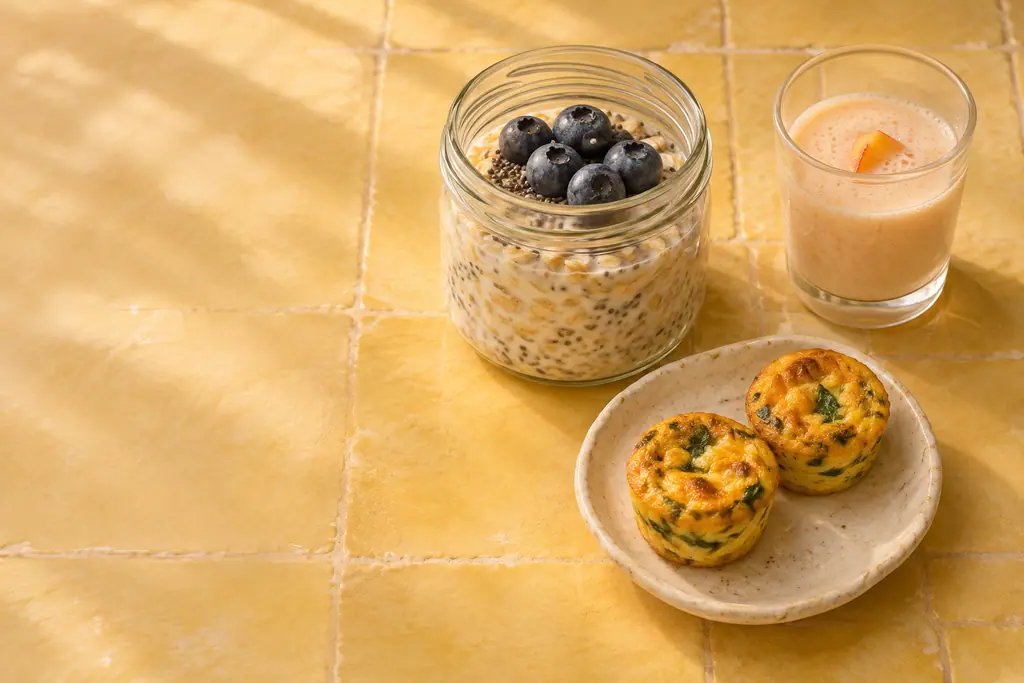
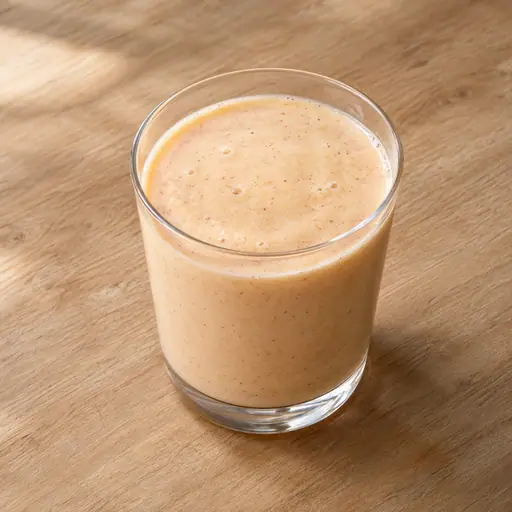
| Zero appetite / no chewing | Sippable chilled kefir or smoothie | Peach Kefir Breakfast Blend (21 g protein, 4 min) |
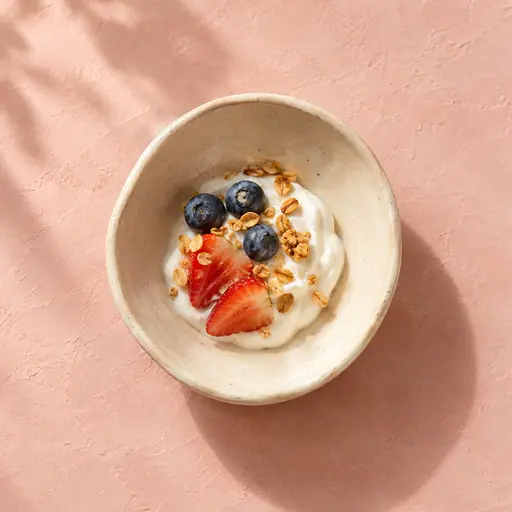
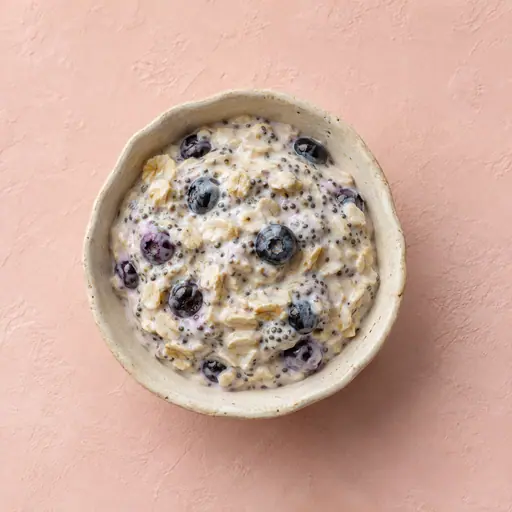
| No-cook, grab from the fridge | Pre-chilled jar of oats & chia or yogurt | High-Protein Blueberry Chia Overnight Oats (No Powder) (21 g protein, 7 g fiber) or High-Protein Blueberry Greek Yogurt Bowl (19 g protein, 3 min) |
| Warm, soft, no greasy pan | Steamed egg bites or baked egg muffins | High-Protein Spinach & Mozzarella Egg Bites (23 g protein) or High-Protein Pepper & Feta Egg Muffins (24 g protein) |
| Hungrier savory morning | Quick skillet fish & eggs | Salmon & Scallion Scramble (27 g protein, 9 min) |
Every protein and fiber figure above is calculated directly from USDA FoodData Central [5]. If your morning feels genuinely queasy, pair this guide with our Queasy-Day Food Guide to keep steam and odors at zero.
Four no-powder ways to cross 20 grams before 9 a.m.
Protein shakes are a helpful backup when solid food feels impossible [1] [3], but you do not have to live on sweet shakes if you dislike the taste. Everyday grocery combinations get there cleanly:
- Greek yogurt + oats + fruit: A single-serve plain nonfat Greek yogurt cup stirred with rolled oats and berries gives smooth, cold protein with gentle soluble fiber.
- Whole eggs + liquid egg whites: Combining 1 or 2 whole eggs with a splash of liquid egg whites doubles protein without adding heavy grease or extra volume — the exact trick inside our egg bites and muffins.
- Overnight oats built on dairy or soy + seeds: Soaking rolled oats in Greek yogurt, milk, or unsweetened soy milk with chia or hemp seeds turns a classic carb-heavy breakfast into a 20+ gram meal ready straight from the fridge.
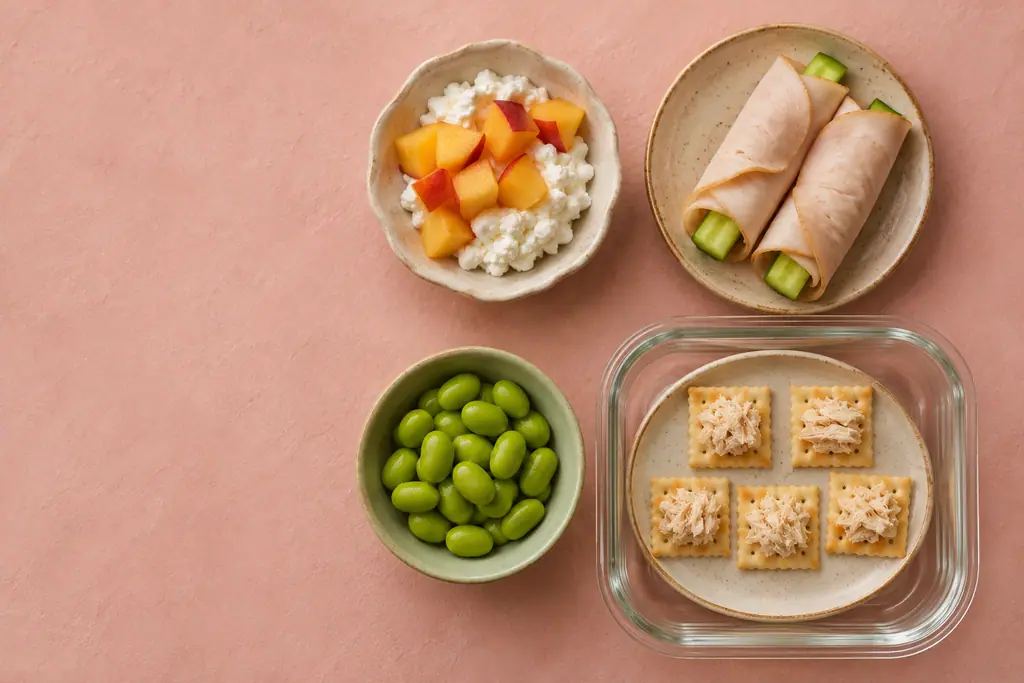
- Cottage cheese (sweet or savory): Pair 3/4 cup of low-fat cottage cheese with sliced peaches, cinnamon applesauce, or cracked pepper and cucumber for zero-stove protein in three minutes.
Watch hidden added sugars in “breakfast” foods
Flavored yogurt cups, granola clusters, muffins, and bottled coffee drinks often look small while packing half a day’s added sugar and almost no protein. The FDA sets the Daily Value for added sugars at 50 grams per day (less than 10% of calories on a 2,000-calorie pattern) and notes that too much added sugar makes it harder to meet nutrient needs within smaller calorie budgets [4].
On the Nutrition Facts label, check the “Includes Xg Added Sugars” line — naturally occurring sugars in plain milk and fruit are separate from added syrups and sweeteners [4]. Buying plain Greek yogurt or kefir and adding your own berries plus a single teaspoon of maple syrup keeps flavor bright while keeping added sugar tiny.
Build your morning into a full day
Stop as soon as you feel comfortably full [3] — if you finish two-thirds of your overnight oats at 8:00 a.m., put the lid back on and finish the rest at 10:30 a.m. Want a complete day built around morning mini-meals plus one-tap nausea swaps? Open our free 1-day plan or calculate your personal protein anchor in the Protein calculator.
Try this in your kitchen
Small plates that match this guide
Six real breakfast plates from our recipe library — three cold no-cook options and three warm egg or fish picks, all with USDA-calculated protein.
- High-Protein Blueberry Greek Yogurt Bowl
- High-Protein Blueberry Chia Overnight Oats (No Powder)
- Peach Kefir Breakfast Blend
- High-Protein Spinach & Mozzarella Egg Bites
- High-Protein Pepper & Feta Egg Muffins
- Salmon & Scallion Scramble



Macros are calculated by code from USDA FoodData Central.
Common questions
What should I eat for breakfast on a GLP-1 when I am not hungry at all?
Lower the chewing and smell barrier first. A chilled smoothie or kefir blend, plain Greek yogurt with berries, or jarred overnight oats goes down easily in a few quiet spoonfuls — and the 2025 joint clinical advisory notes that letting your stomach stay empty for long stretches can worsen nausea.
How much protein should a GLP-1 breakfast have?
For most adults targeting 80 to 120 grams of protein per day across four or five small plates, aiming for roughly 19 to 27 grams at breakfast builds strong momentum early without forcing a huge plate. In a crossover feeding study (Mamerow et al., 2014), spreading protein evenly starting at breakfast stimulated 24-hour muscle protein synthesis 25% more effectively than eating a low-protein breakfast and a heavy dinner.
Can I get 20 grams of protein at breakfast without protein powder?
Yes. Plain nonfat Greek yogurt, cottage cheese, eggs paired with egg whites, smoked or canned salmon, milk, chia seeds, and hemp hearts all reach 19 to 27 grams of protein per small plate using ordinary grocery foods calculated from USDA FoodData Central.
What breakfast foods are easiest to pause if mornings feel queasy?
Greasy breakfast sandwiches, bacon, sausage, rich pastries, and heavy fried hash browns are high in fat and slow digestion further. The 2025 joint clinical advisory recommends pausing high-fat, fried, or heavily sweetened foods when your stomach feels sensitive and choosing mild, lower-fat protein instead.
Sources
Every health, nutrition, and food-safety claim in this guide links to a published advisory, peer-reviewed paper, or public agency document.
- Nutritional priorities to support GLP-1 therapy for obesity: A joint advisory from the American College of Lifestyle Medicine, the American Society for Nutrition, the Obesity Medicine Association, and The Obesity Society — The American Journal of Clinical Nutrition / Obesity Pillars (2025)
- Dietary protein distribution positively influences 24-h muscle protein synthesis in healthy adults — The Journal of Nutrition (via PubMed, PMID 24477298) (2014)
- Nutritional and lifestyle supportive care recommendations for management of obesity with GLP-1-based therapies: An expert consensus statement using a modified Delphi approach — Obesity Pillars (2026)
- Added Sugars on the Nutrition Facts Label — U.S. Food and Drug Administration (FDA) (2024)
- USDA FoodData Central — USDA Agricultural Research Service (2026)