At a glance
- Muscle mass declines gradually after ages 30–35 and faster after age 65 for women (NIA), while GLP-1 weight reduction can include 15%–20% lean mass loss without strength work.
- Clinical advisories propose 1.2–1.6 g/kg/day (or 80–120 g/day) during active weight loss, and the PROT-AGE Study Group advises at least 1.0–1.2 g/kg/day for older adults.
- For women 51+, the calcium RDA rises to 1,200 mg/day alongside 600 IU (15 mcg) of vitamin D (800 IU / 20 mcg over 70) — dairy, salmon, and calcium-set tofu deliver protein and bone nutrients together.
- Pair steady protein with 2+ days/week of strength training (CDC), and always check protein goals with your doctor if you have chronic kidney disease.
After 50, every small plate has two jobs: protecting the muscle that carries you through the day and feeding the bone that supports it.
Midlife changes the nutrition math — even before a GLP-1 medication shrinks your appetite. Once you cross 50, eating “just a little toast and salad” on low-hunger days does not merely leave you tired; over months, it quietly chips away at muscle strength and bone reserves that are far harder to rebuild later.
The good news: protecting both muscle and bone does not require massive steaks or complicated supplements. It comes down to smarter protein targets, double-duty foods, and two short strength sessions a week.
Why muscle needs extra protection after 50
Three well-documented biological shifts explain why women in perimenopause, menopause, and beyond benefit from putting protein at the center of every small plate:
- Natural age-related decline (sarcopenia): According to the National Institute on Aging (NIA), muscle mass and strength peak around ages 30 to 35, decline gradually from there, and decline faster after age 65 for women (and 70 for men) [3]. Roughly 30% of adults over age 70 experience mobility limits such as trouble walking, climbing stairs, or rising from a chair [3].
- Reduced anabolic response: The international PROT-AGE Study Group notes that aging muscles show a blunted response to small protein servings, recommending at least 1.0 to 1.2 g/kg/day for healthy older adults (>65) to maintain and regain lean mass and physical function — and 1.2 g/kg/day or higher for those who exercise regularly [2].
- Lean-mass loss during weight reduction: The 2025 joint clinical advisory reports that without structured resistance exercise, lean body mass typically accounts for 15% to 20% of weight reduction in women, specifically highlighting perimenopause, menopause, and older age as higher-risk windows [1]. During active weight reduction, the advisory proposes 1.2 to 1.6 g/kg/day (based on an adjusted or reference body weight, or roughly 80 to 120 g/day for many adults), while advising against prolonged intake above 2 g/kg/day [1].
Want to convert your own reference weight in pounds cleanly? Open our Protein calculator or walk through the solved tables in GLP-1 Protein Math.
Pair protein with bone-supporting calcium and vitamin D
Smaller portions can accidentally cut back on bone-critical minerals right when women need them most. MedlinePlus summarizes the National Academies Dietary Reference Intakes clearly [4] [5]:
- Calcium RDA: Rises from 1,000 mg/day (ages 19–50) to 1,200 mg/day for women ages 51 and older (with a safe upper limit of 2,000 mg/day over age 50 from food and supplements combined) [4]. Removing fat from milk or yogurt does not lower its calcium [4].
- Vitamin D RDA: 600 IU (15 mcg) per day for adults ages 19–70, rising to 800 IU (20 mcg) per day over age 70 [5]. Vitamin D is required for your body to absorb calcium, yet very few foods contain it naturally — fatty fish (salmon, tuna, mackerel), fortified milk and plant beverages, egg yolks, and UV-exposed mushrooms are the main food sources [5].
When you only have room for four small plates a day, pick double-duty proteins that feed muscle and bone in the same bite.
Double-duty small plates for women 50+
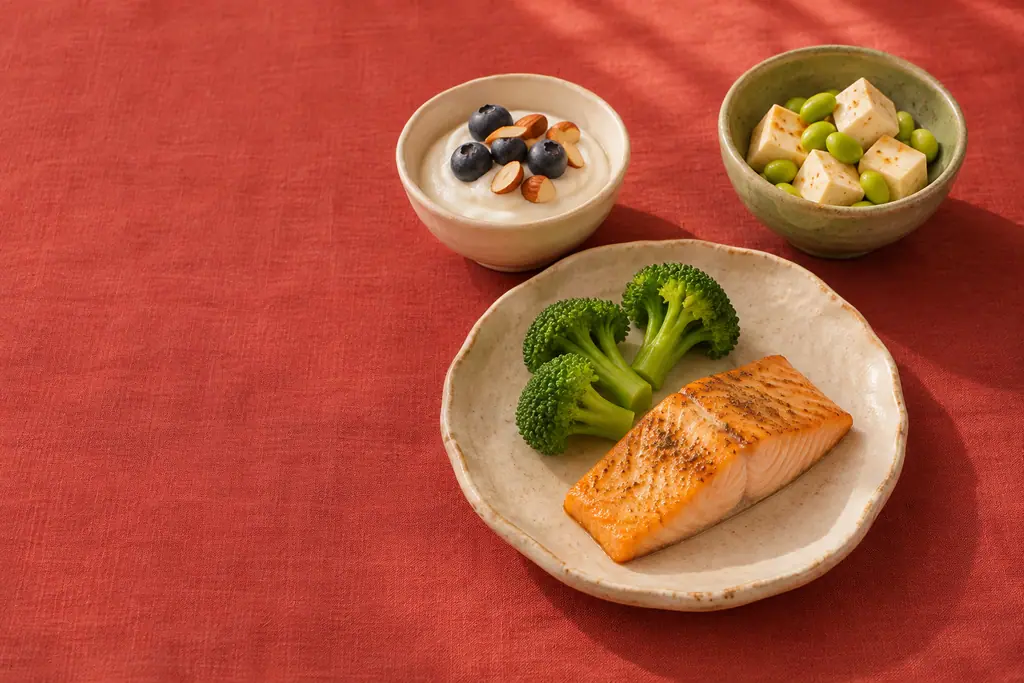
Every meal below packs 19 to 28 grams of USDA-calculated protein alongside calcium-rich dairy, calcium-set tofu, or vitamin-D-rich salmon:
| Double-duty anchor | Key nutrients in the bowl | Real small-plate recipe |
|---|---|---|
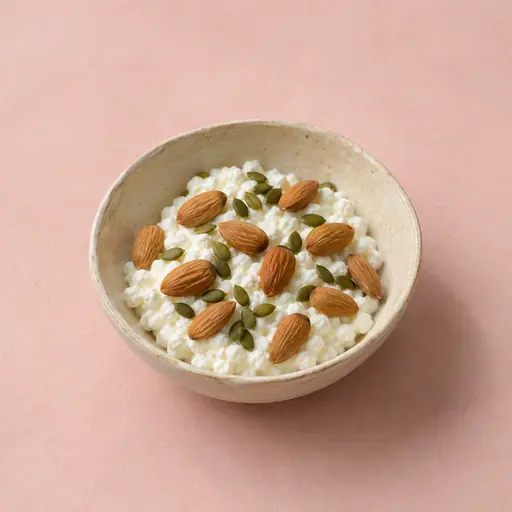
| Plain Greek yogurt & cottage cheese | High protein + easily absorbed dairy calcium [4] | High-Protein Blueberry Greek Yogurt Bowl (19 g protein) or High-Protein Cottage Cheese, Pepita & Almond Bowl (24 g protein) |
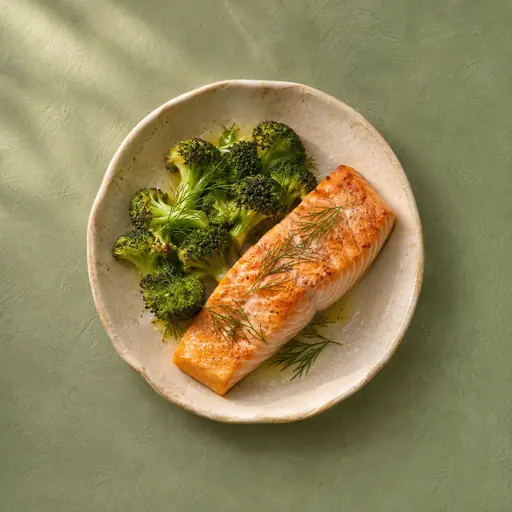
| Fatty fish (salmon) | High protein + natural vitamin D (and calcium if canned with soft bones) [4] [5] | Sheet-Pan Salmon & Broccoli (26 g protein) or Salmon & Rice Bowl (25 g protein) |
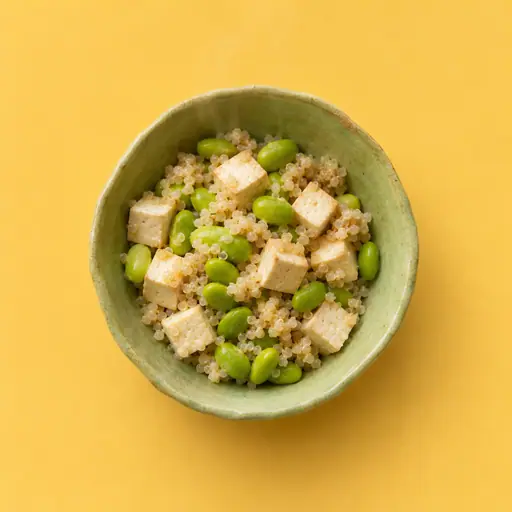
| Calcium-set tofu & edamame | Plant protein + fiber + added calcium for dairy-free plates [4] | Tofu & Edamame Quinoa Bowl (28 g protein, 8 g fiber) |
| Eggs + part-skim cheese | Soft, easy protein + egg yolk vitamin D + dairy calcium [4] [5] | High-Protein Spinach & Mozzarella Egg Bites (23 g protein) |
(A quick kitchen note from MedlinePlus: high-oxalate greens like raw spinach bind calcium so less is absorbed — rely on dairy, calcium-set tofu, fortified soy milk, broccoli, or canned bone-in salmon as your main calcium anchors rather than spinach alone [4].)
Strength training makes every gram count
Both the 2025 joint clinical advisory and the NIA stress one non-negotiable truth: protein alone cannot preserve muscle without a strength signal [1] [3].
The CDC Physical Activity Guidelines recommend muscle-strengthening activities covering all major muscle groups at least 2 days a week alongside working toward 150 minutes a week of moderate aerobic activity [6]. As the NIA highlights, you do not need heavy gym barbells — dumbbells, resistance bands, or bodyweight movements at home help maintain muscle mass, balance, and everyday independence at any age [3].
Check in with your care team
If you have chronic kidney disease (CKD), NIDDK notes that kidneys filter waste from protein metabolism, so individualized protein limits must be set with your doctor or renal dietitian [7] — and the PROT-AGE Study Group notes the same caution in severe kidney disease [2]. Your clinician can also check your blood 25-hydroxyvitamin D level and advise whether a vitamin D or calcium supplement makes sense alongside your food [4] [5].
Ready to turn these targets into four calm, finishable plates? Plug your reference weight into our Protein calculator, explore High-Protein Foods for Low Appetite, or generate a realistic day right now in our free 1-day plan.
Try this in your kitchen
Small plates that match this guide
Six high-protein plates from our library that naturally pair strong protein with bone-supporting dairy, fatty fish, or calcium-set tofu.
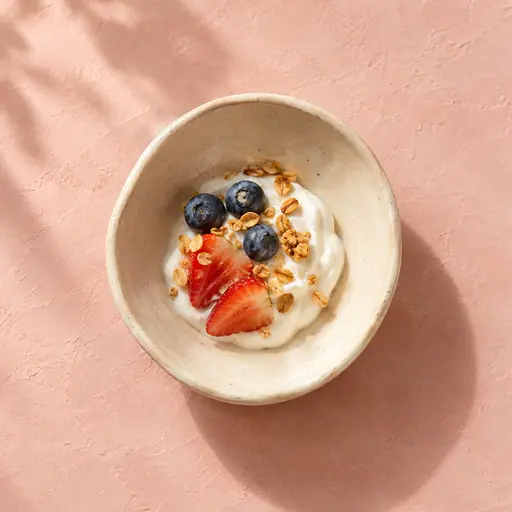
- High-Protein Blueberry Greek Yogurt Bowl
- High-Protein Cottage Cheese, Pepita & Almond Bowl
- Sheet-Pan Salmon & Broccoli For the rest of the family: roast four fillets with the broccoli and add a pot of rice.
- Salmon & Rice Bowl For the rest of the family: add more rice and a tray of roasted broccoli.
- Tofu & Edamame Quinoa Bowl For the rest of the family: add more quinoa and a tray of roasted vegetables.
- High-Protein Spinach & Mozzarella Egg Bites


Macros are calculated by code from USDA FoodData Central.
Common questions
Why do women over 50 need to pay extra attention to protein on a GLP-1?
Two shifts overlap after 50. First, the National Institute on Aging notes that muscle mass and strength gradually decline after ages 30 to 35 and decline faster after age 65 in women (a process called sarcopenia). Second, the 2025 joint clinical advisory notes that lean tissue typically makes up 15% to 20% of weight reduction in women without structured strength training, flagging perimenopause, menopause, and older age as periods of heightened muscle-loss risk.
How much protein per day is recommended for women over 50 during GLP-1 weight loss?
While the baseline adult RDA is 0.8 g/kg/day, the 2025 joint clinical advisory proposes 1.2 to 1.6 g/kg/day of reference body weight (or an absolute benchmark of 80 to 120 g/day) during active weight reduction, and the international PROT-AGE Study Group similarly recommends at least 1.0 to 1.2 g/kg/day for healthy older adults (1.2 g/kg/day or higher when exercising). Confirm your individual target with your doctor, especially if you have kidney disease.
How can I support bone health (calcium and vitamin D) when I am eating smaller portions?
MedlinePlus lists the calcium RDA for women ages 51 and older at 1,200 mg/day (up from 1,000 mg/day before 50), alongside a vitamin D RDA of 600 IU (15 mcg) for adults 19–70 and 800 IU (20 mcg) over age 70. Choosing double-duty proteins — plain Greek yogurt, cottage cheese, fortified milk or soy milk, calcium-set tofu, and fatty fish like salmon — lets small plates cover protein, calcium, and vitamin D at the same time.
Is eating enough protein enough to keep my strength after 50?
No. Both the 2025 joint advisory and the National Institute on Aging emphasize that muscles need mechanical resistance to stay strong. The CDC Physical Activity Guidelines recommend muscle-strengthening activities covering all major muscle groups at least 2 days a week, alongside aerobic activity — and NIA notes it is never too late to build strength.
Sources
Every health, nutrition, and food-safety claim in this guide links to a published advisory, peer-reviewed paper, or public agency document.
- Nutritional priorities to support GLP-1 therapy for obesity: A joint advisory from the American College of Lifestyle Medicine, the American Society for Nutrition, the Obesity Medicine Association, and The Obesity Society — The American Journal of Clinical Nutrition / Obesity Pillars (2025)
- Evidence-based recommendations for optimal dietary protein intake in older people: a position paper from the PROT-AGE Study Group — Journal of the American Medical Directors Association (via PubMed, PMID 23867520) (2013)
- How can strength training build healthier bodies as we age? — National Institute on Aging (NIA, NIH) (2022)
- Calcium in diet — MedlinePlus, National Library of Medicine (NIH) (2024)
- Vitamin D — MedlinePlus, National Library of Medicine (NIH) (2024)
- Adult Activity: An Overview (Physical Activity Guidelines for Americans) — Centers for Disease Control and Prevention (CDC) (2023)
- Healthy Eating for Adults with Chronic Kidney Disease — National Institute of Diabetes and Digestive and Kidney Diseases (NIDDK, NIH) (2025)