At a glance
- During active weight loss, clinical advisories propose higher daily protein targets (around 1.2–1.6 g/kg or roughly 80–120 g/day for many adults) to help protect muscle.
- Eat your protein first while appetite is freshest — before bread, salad, or side dishes fill you up.
- Choose compact, low-volume proteins like Greek yogurt, cottage cheese, eggs, canned fish, poultry, and smooth shakes.
- Pair protein with resistance exercise at least 2 days a week to preserve strength and lean mass.
Stop trying to eat a dinner-sized portion of meat. Four small, protein-first moments add up quietly without ever feeling like a chore.
When your appetite shrinks on a GLP-1 medication, staring at a 6-ounce chicken breast can feel like looking at a mountain. Yet protein is the single nutrient you can least afford to let slide while losing weight. The trick is changing the format of your protein — smaller, softer, cooler, and spread gently across the day.
Why protein matters more when you eat less
Any significant weight reduction removes both body fat and lean tissue. According to the 2025 joint clinical advisory from four major nutrition and obesity societies, lean body mass typically accounts for roughly 15% to 20% of weight reduction in women (and 20% to 25% in men) when structured strength training is absent — and low protein intake from reduced appetite raises the risk of muscle loss, particularly around perimenopause, menopause, and older age [1].
While the baseline Recommended Dietary Allowance (RDA) for healthy adults is 0.8 grams of protein per kilogram of body weight per day, the 2025 joint advisory highlights higher proposed targets during active weight loss of 1.2 to 1.6 g/kg/day (or an absolute benchmark of 80 to 120 g/day for many adults to make daily adherence simpler) [1]. The 2026 modified Delphi expert consensus similarly recommends 1.2 to 1.5 g/kg/day (or 25% to 30% of calories on a 1,600-calorie pattern) during active weight loss [2]. You can check your personal pound-to-kilogram range with our Protein calculator and confirm it with your doctor or registered dietitian — especially if you have kidney disease or diabetes [1].
The “protein first” rule
If you only remember one kitchen habit from this guide, make it this one: put the fork into the protein first. The 2025 joint advisory explicitly recommends eating protein-rich foods first in a meal so you capture enough protein before early fullness kicks in [1].
If you only manage six bites before you feel comfortably full, make sure four of those six bites are protein.
Wait on the rolls, chips, or big leafy salad until you have had a few bites of your eggs, fish, yogurt, tofu, beans, or chicken. You are not banning carbs or vegetables — you are simply changing the batting order.
Low-volume protein formats that go down easily
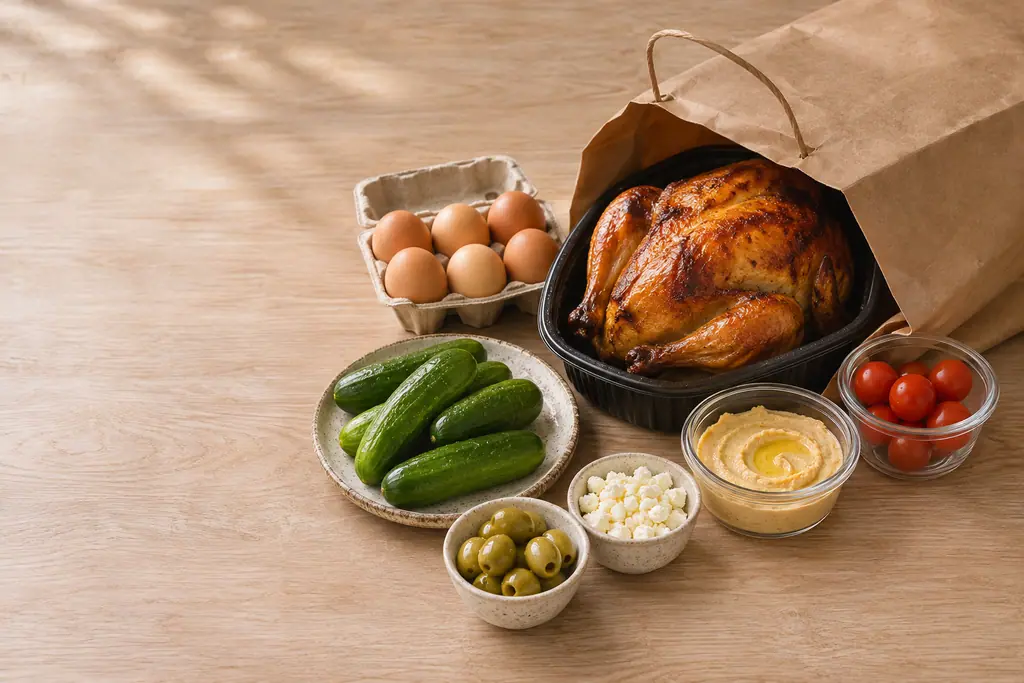
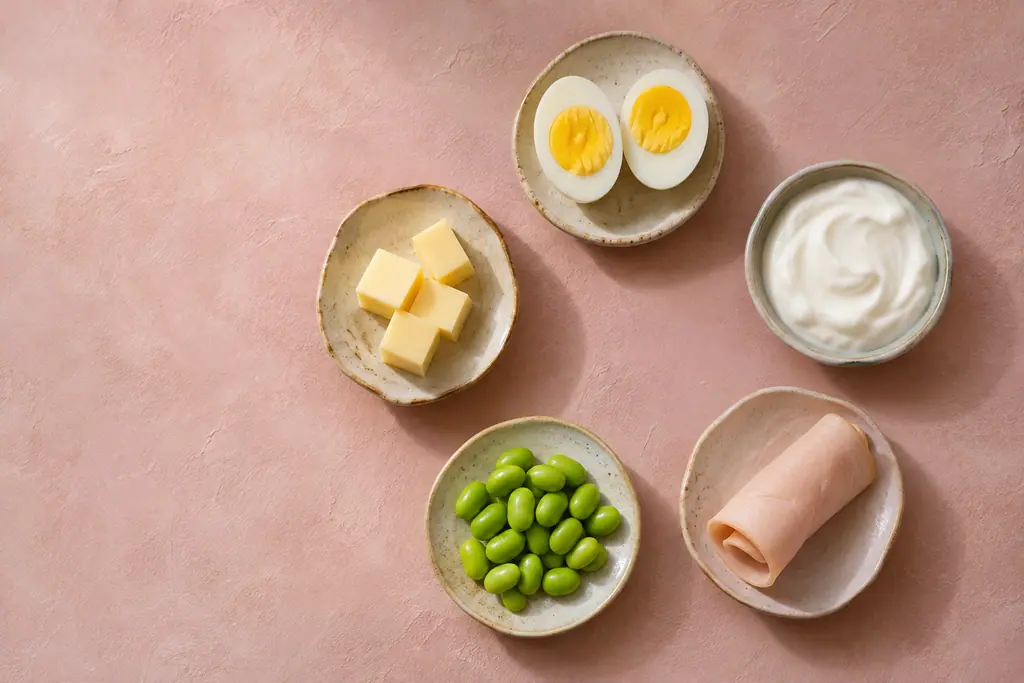
When chewing feels like work, compact and soft formats beat bulky plates. The 2025 joint advisory specifically encourages lower-volume, nutrient-dense protein foods — fish, eggs, Greek yogurt, cottage cheese, beans, lentils, lean poultry, and nuts or seed spreads — while keeping red and processed meats in moderation [1]:
| Format | Everyday staples | Best moment | Real small-plate pairing |
|---|---|---|---|
| Sippable blends | Milk + whey or soy blend + frozen berries | Low-appetite mornings when chewing feels hard [1] [2] | Strawberry Protein Smoothie |
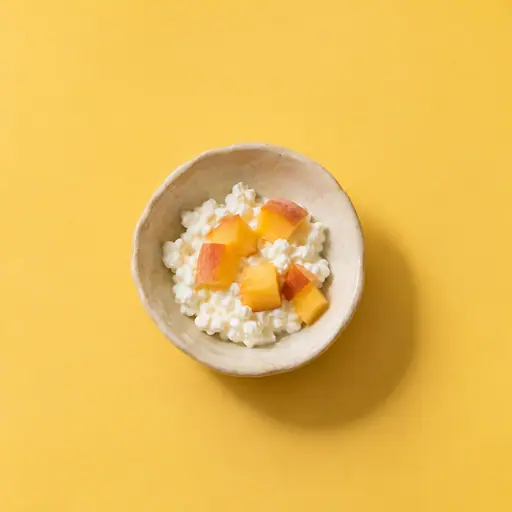
| Spoonable cold dairy | Plain Greek yogurt, cottage cheese, ricotta | 3-minute desk lunch or afternoon anchor | Cottage Cheese & Peaches |
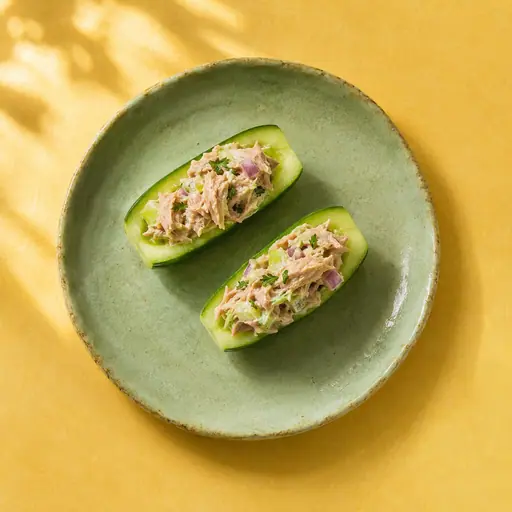
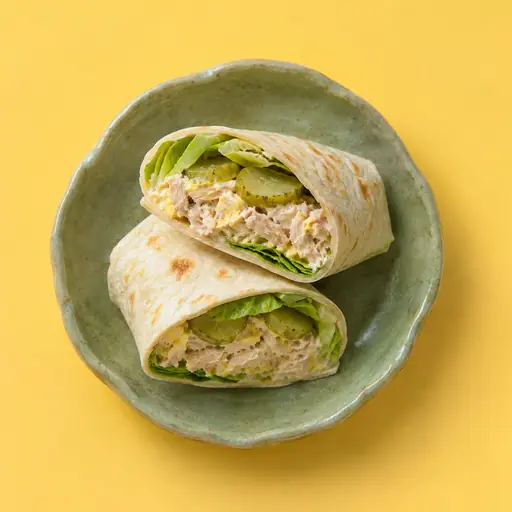
| Flaky pantry fish | Canned light tuna or salmon with yogurt & herbs | Crisp, light bites with zero stove time | Tuna & Cucumber Bites or Tuna Dill Pickle Mini Wrap |
| Soft cooked eggs | Whole eggs + egg whites steamed in ramekins | Warm, tender bites that reheat cleanly | Spinach & Mozzarella Egg Bites |
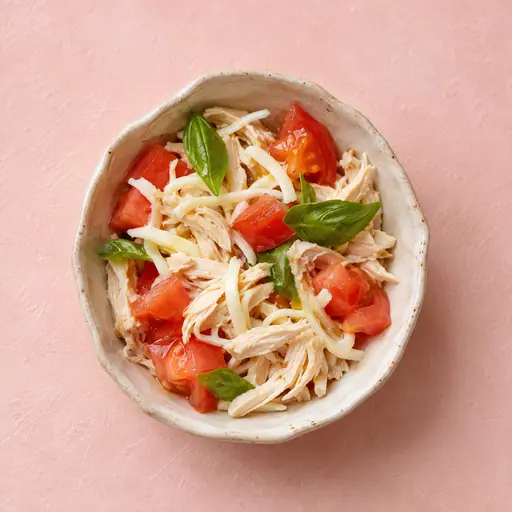
| Pre-cooked poultry | Shredded rotisserie chicken or lean turkey | Fast lunch cups without cooking raw meat | Rotisserie Chicken Caprese Cup |
| Plant proteins | Shelled edamame, tofu, lentils, beans, quinoa | Steady amino-acid mix across the day [4] | See our Fiber and Fluids guide |
MedlinePlus notes that you do not need to combine every essential amino acid in a single sitting — eating a variety of protein foods across the full day covers what your body needs to repair and maintain tissue [4].
Split your goal into 4 or 5 small anchors
Trying to cram a full day of protein into two meals means facing a huge portion at once — far too much food for a small appetite. Splitting your day into 4 or 5 mini-meals (or 4 to 6 small eating occasions, as discussed in the 2026 Delphi consensus [2]) drops every plate down to a calm, finishable size.
If you only eat half of a plate, stop when you feel comfortably full [2] and save the rest. Half a plate now plus a yogurt cup or smoothie two hours later still moves your day forward. (Want to see exact meal numbers side by side? Every recipe in the “Try this” box below pulls live USDA-calculated protein straight from our library.)
Pair your plate with strength work
One honest truth from both the 2025 advisory and the 2026 Delphi consensus: protein alone cannot protect muscle mass [1] [2]. Your body needs the signal to keep muscle tissue. The CDC Physical Activity Guidelines for Americans recommend muscle-strengthening activities that work all major muscle groups at least 2 days a week, alongside working toward 150 minutes of moderate aerobic activity per week [3]. Even two short sessions a week with dumbbells, resistance bands, or bodyweight moves make every gram of protein on your small plate count twice as much.
Next steps in your kitchen
- Turn your Protein calculator range into four finishable small plates with our free 1-day plan.
- Keep reading: GLP-1 Breakfast Ideas, High-Protein GLP-1 Snacks, and Protein for Women Over 50.
Try this in your kitchen
Small plates that match this guide
Six compact, low-appetite mini-meals from our library — each one delivers strong protein in a small footprint.
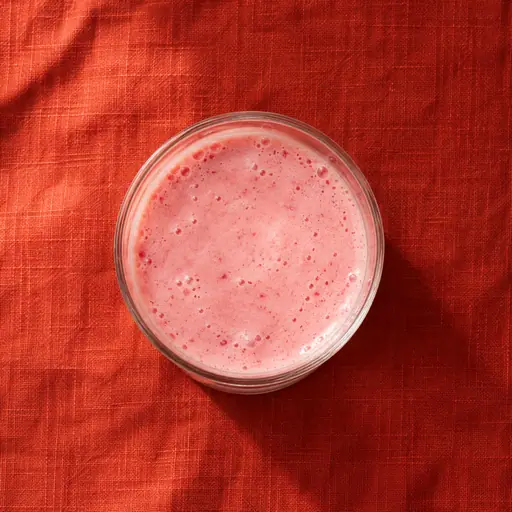
- Low-Volume Strawberry Protein Smoothie
- Tuna & Cucumber Bites
- High-Protein Cottage Cheese & Peach Bowl
- High-Protein Spinach & Mozzarella Egg Bites
- Tuna Dill Pickle Mini Wrap
- No-Cook Rotisserie Chicken Caprese Bowl

Macros are calculated by code from USDA FoodData Central.
Common questions
What should I eat when literally nothing sounds good on a GLP-1?
Lower the chewing and smell barrier first. Smooth, cold options like a protein smoothie, plain Greek yogurt, cottage cheese with fruit, or a mild broth cup require almost no chewing and go down much faster than a heavy hot plate.
Is it okay to use protein shakes when my appetite is very low?
Yes. Both the 2025 joint clinical advisory (ACLM, ASN, OMA, TOS) and the 2026 modified Delphi consensus note that high-protein shakes or fortified options can help people meet daily protein goals when reduced appetite makes solid food hard to finish.
How do I know how many grams of protein I actually need each day?
Clinical advisories propose 1.2 to 1.6 g/kg of reference body weight per day (or an absolute benchmark of 80 to 120 g/day) during active weight loss. Use our free protein calculator to convert your weight in pounds, and confirm your personal range with your doctor or registered dietitian — especially if you have kidney disease.
Does eating enough protein alone prevent muscle loss during weight loss?
No. Both the 2025 joint advisory and the 2026 modified Delphi consensus emphasize that protein alone does not preserve or build muscle mass — pairing adequate protein with muscle-strengthening resistance exercise at least 2 days a week (as recommended by the CDC) is what protects lean tissue.
Sources
Every health, nutrition, and food-safety claim in this guide links to a published advisory, peer-reviewed paper, or public agency document.
- Nutritional priorities to support GLP-1 therapy for obesity: A joint advisory from the American College of Lifestyle Medicine, the American Society for Nutrition, the Obesity Medicine Association, and The Obesity Society — The American Journal of Clinical Nutrition / Obesity Pillars (2025)
- Nutritional and lifestyle supportive care recommendations for management of obesity with GLP-1-based therapies: An expert consensus statement using a modified Delphi approach — Obesity Pillars (2026)
- Adult Activity: An Overview (Physical Activity Guidelines for Americans) — Centers for Disease Control and Prevention (CDC) (2023)
- Protein in diet — MedlinePlus, National Library of Medicine (NIH) (2024)