At a glance
- Skip big, hot, fragrant meals; cold or room-temperature foods release far fewer cooking odors.
- Aim for small, gentle bites every 3 to 4 hours rather than forcing a full dinner plate or fasting all day.
- Keep liquids steady in small sips — cold water, clear broth, or ginger and peppermint tea — so dehydration does not compound nausea.
- Pause greasy, fried, very spicy, and heavy high-fiber dishes until your stomach settles.
An empty stomach often makes nausea louder. Four calm bites of something cold and plain beat waiting until you feel hungry.
If you open the fridge, catch a whiff of last night’s roasted garlic, and immediately shut the door, you are not doing anything wrong. In a 2025 national RAND survey of U.S. adults using GLP-1 medications, 52% reported nausea (43.2% mild and 8.8% serious) [1], and clinical trials report nausea in 25% to 44% of participants [2]. On days like that, regular meal advice falls flat. You do not need a complicated recipe; you need calm food you can actually get down.
Why skipping meals can backfire
When your stomach feels uneasy, the instinct is to eat nothing and wait for it to pass. The 2025 joint clinical advisory (ACLM, ASN, OMA, and TOS) notes that nausea frequently shows up in the morning or after longer stretches without food — and that skipping meals can trap you in a loop where an empty stomach makes nausea worse [2].
Eating a few bland bites on a schedule is not forcing yourself to eat. It is giving a quiet, slow-moving stomach something predictable to work with.
Instead of waiting for hunger cues that may not arrive, both the 2025 joint advisory and MedlinePlus patient instructions point toward small, frequent meals — breakfast followed by small portions every 3 to 4 hours, or up to 6 to 8 tiny eating occasions across the day rather than three big plates [2] [3]. Large meals sit heavily in the stomach and make vomiting more likely [2].
What to tolerate vs. what to pause
You do not have to ban any food forever. On a rough stomach day, simply lean into low-odor, low-fat textures and park heavy or aromatic dishes until your stomach feels steady again [2] [3]:
| Easier to tolerate today | Better to pause until steady | Why it helps |
|---|---|---|
| Cold or room-temperature dairy & blends (Greek yogurt, cottage cheese, kefir, smooth shakes) | Hot, steaming, garlicky, or strongly scented pans | Less steam means fewer triggering food odors [3] |
| Mild, plain bases (crackers, toast, baked chicken, mild fish, soft potatoes, rice, clear broth) | Greasy, fried, heavily processed, or rich fast foods | High fat slows digestion further and aggravates nausea [2] [3] |
| Small, gentle portions every 3–4 hours | Large, heavy dinner plates | Overfilling a slow stomach raises the risk of vomiting [2] |
| Soft, lower-fiber produce (peaches, applesauce, cooked carrots) during acute nausea | Huge raw salads or heavy high-fiber plates | Temporarily easing heavy fiber can calm acute nausea [2] |
| Cold water, clear broth, ginger or peppermint tea | Alcohol, excess caffeine, very spicy dishes, carbonated drinks | Gentle hydration without irritating the stomach [2] [3] |
Note on dairy: If dairy makes you feel gassy or triggers loose stools on a queasy day, MedlinePlus notes dairy can worsen gas or diarrhea for some people [3] — switch straight to broth, tofu blends, eggs, or plain poultry instead.
A calm 1-day queasy eating rhythm
Here is how four or five tiny, low-odor eating moments look across a real day (every recipe below is linked in our “Try this” box with exact USDA-calculated protein):
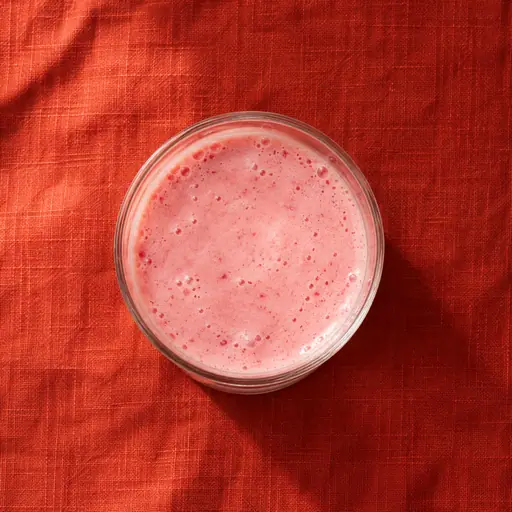
- Morning (cold, sippable): Start gently with a chilled Peach Kefir Breakfast Blend or Strawberry Protein Smoothie so your stomach is not empty for hours [2].
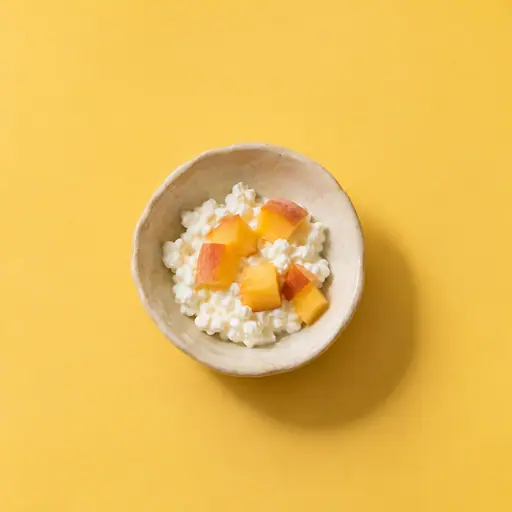
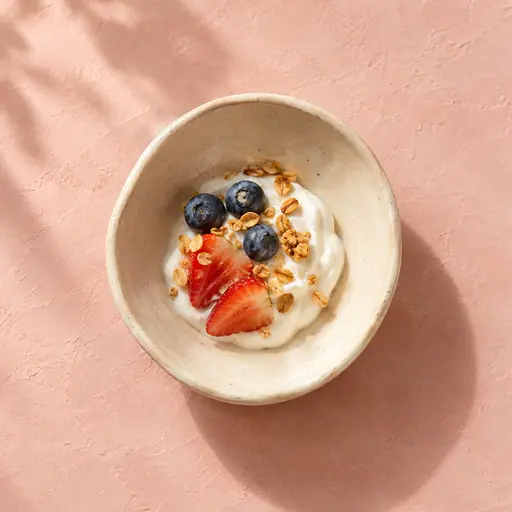
- Midday (cold, spoonable): Keep smells at zero with Cottage Cheese & Peaches or a Blueberry Greek Yogurt Bowl — or go dairy-free with a smooth Pineapple Ginger Tofu Blend.
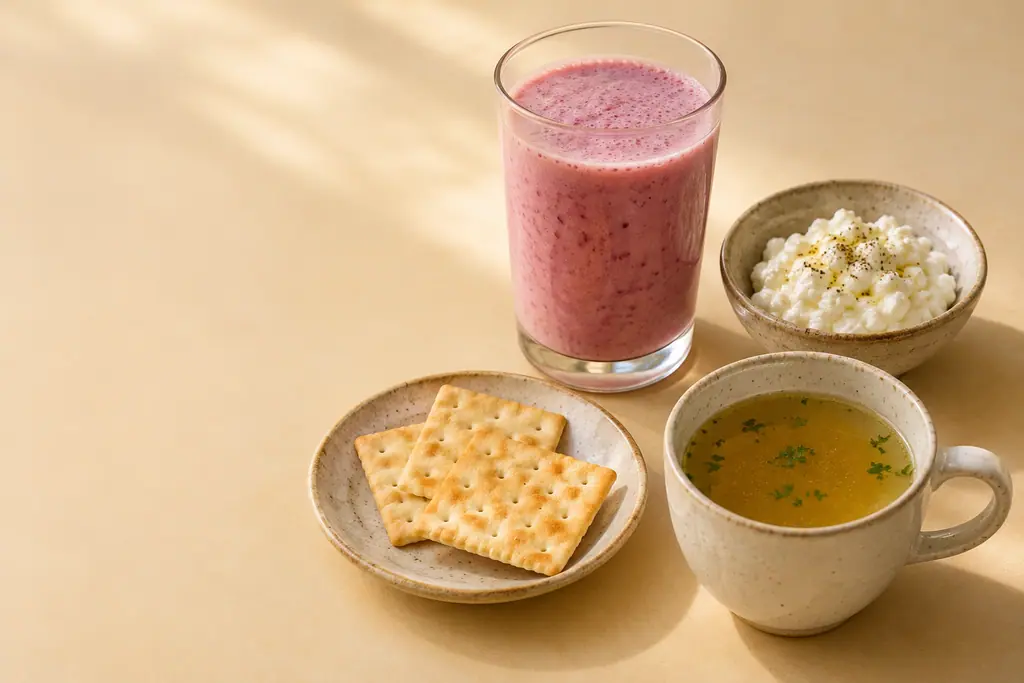
- Afternoon (light reset): Try a small spoonable Strawberry Cheesecake Cottage Cup or a few saltines with cold water.
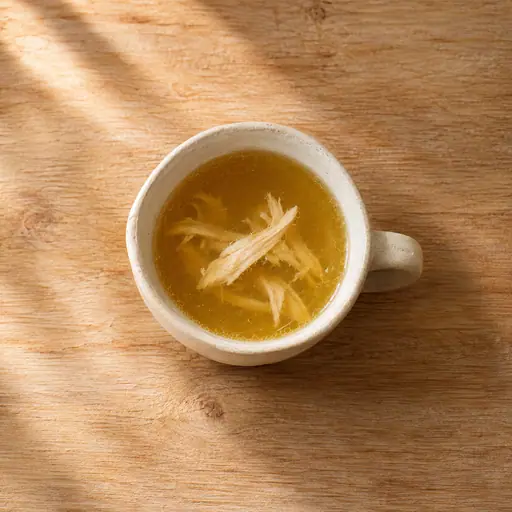
- Evening (gentle warm mug): Skip heavy dinner plates and sip a soothing Chicken & Rice Broth Cup or Tofu & Spinach Miso Soup.
You can also open our free 1-day plan, tap Queasy, and swap any plate in one click.
Sip steadily — and sit upright after you eat
Hydration comes first on a queasy day. Both the 2025 joint advisory and the 2026 modified Delphi expert consensus emphasize prioritizing hydration during nausea or vomiting, warning that dehydration from persistent nausea, vomiting, or diarrhea can cause acute kidney injury — with or without prior kidney disease [2] [4].
MedlinePlus suggests aiming for 8 to 10 cups (about 2 to 2.5 liters) of clear liquids across the day when managing nausea, noting that cold water is often easiest to tolerate [3]. Clear broths and ginger or peppermint tea are also soothing options [2] [3]. Take small sips between bites rather than large gulps, and sit upright after eating instead of lying right down [3].
When to call your doctor
Eating half of your plate and stopping when you feel comfortably full is a win [4]. Still, nausea is not something you have to tough out alone. Contact your doctor or care team promptly if you cannot keep liquids down, have persistent vomiting or diarrhea, notice dizziness or dark urine, or experience severe abdominal pain [2] [3].
Next steps in your kitchen
- Check your realistic daily protein range in the Protein calculator once your stomach settles, or tap Queasy inside our free 1-day plan for instant cold swaps.
- Explore morning and snack backups in GLP-1 Breakfast Ideas and High-Protein GLP-1 Snacks.
Try this in your kitchen
Small plates that match this guide
Eight real queasy-safe options from our recipe library: cold or gentle-warm, mild in flavor, and backed by USDA nutrition numbers.
- High-Protein Cottage Cheese & Peach Bowl
- Low-Volume Strawberry Protein Smoothie
- Gentle Chicken & Rice Soup Cup (Queasy-Safe) For the rest of the family: add dinner rolls and a side of green beans.
- High-Protein Blueberry Greek Yogurt Bowl
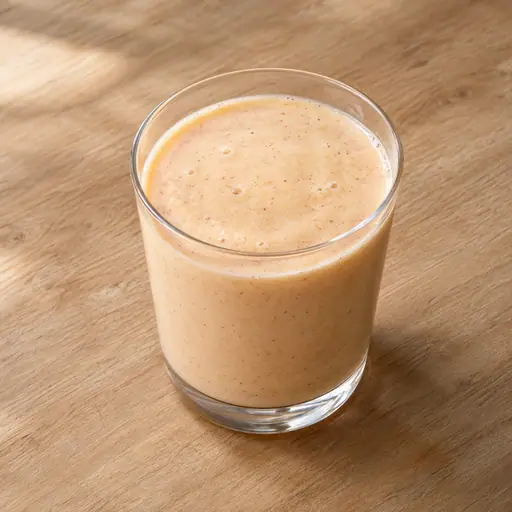
- Peach Kefir Breakfast Blend
- Pineapple Ginger Tofu Blend
- Tofu & Spinach Miso Soup For the rest of the family: ladle into four bowls and serve with steamed rice.
- High-Protein Strawberry Cottage Cheese Cheesecake Cup
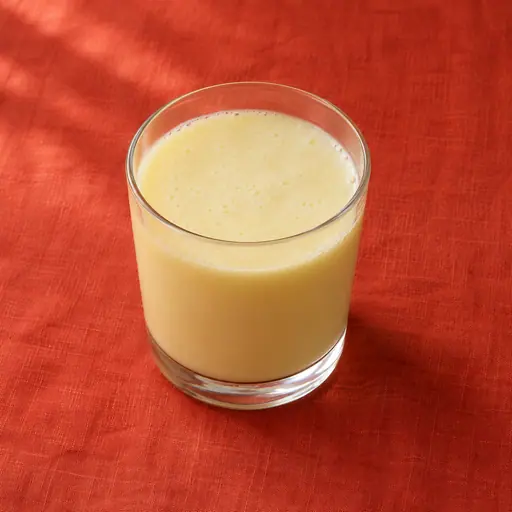
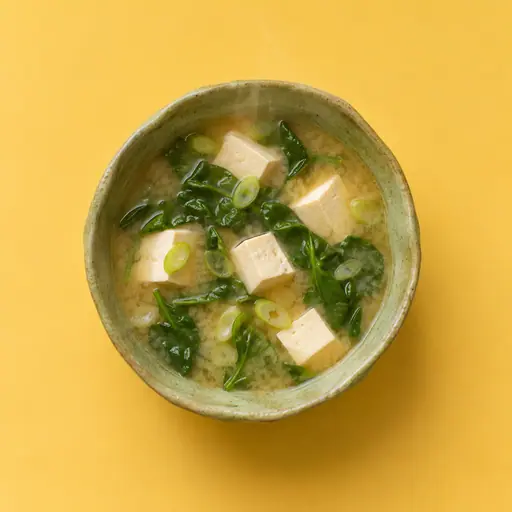
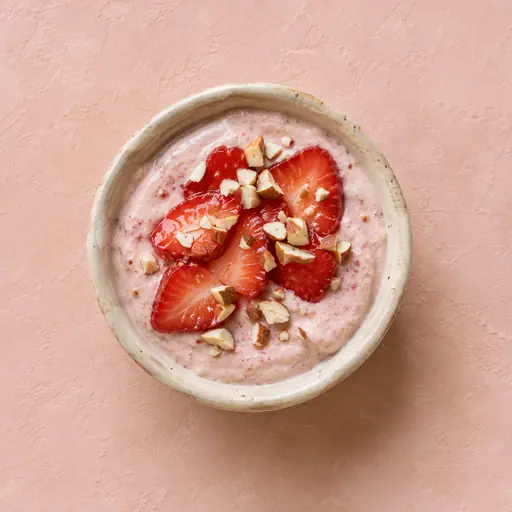
Macros are calculated by code from USDA FoodData Central.
Common questions
Should I force myself to eat when I feel nauseous on a GLP-1 medication?
Do not force a large plate, because large meals make vomiting more likely. Instead, the 2025 joint clinical advisory notes that going long stretches without eating can make nausea worse — try a few calm, bland bites (such as crackers, chilled yogurt, cottage cheese, or warm broth) every 3 to 4 hours and stop as soon as you feel comfortably full.
Why do cold foods feel easier than hot dinners on nausea days?
Hot food releases steam and strong cooking smells, and MedlinePlus patient instructions specifically advise avoiding strong food odors when nauseated. Chilled or room-temperature options like smoothies, kefir blends, Greek yogurt bowls, or cottage cheese carry almost no smell while still delivering steady protein.
Can I use these food ideas on any GLP-1 medication, including oral options?
Yes. These gentle kitchen swaps are based on how your stomach feels today rather than a specific brand or schedule, whether you take an injectable or oral GLP-1 medication. Always follow your prescribing clinician's instructions for taking your medication.
When should I call my doctor about nausea on a GLP-1?
Contact your care team promptly if nausea or vomiting is severe, lasts more than a day or two, keeps you from holding down fluids, or comes with dizziness, dark urine, or severe abdominal pain — dehydration from persistent vomiting or diarrhea can stress the kidneys even without prior kidney disease.
Sources
Every health, nutrition, and food-safety claim in this guide links to a published advisory, peer-reviewed paper, or public agency document.
- New Weight Loss Drugs: GLP-1 Agonist Use and Side Effects in the United States — RAND Corporation (2025)
- Nutritional priorities to support GLP-1 therapy for obesity: A joint advisory from the American College of Lifestyle Medicine, the American Society for Nutrition, the Obesity Medicine Association, and The Obesity Society — The American Journal of Clinical Nutrition / Obesity Pillars (2025)
- When you have nausea and vomiting — MedlinePlus, National Library of Medicine (NIH) (2024)
- Nutritional and lifestyle supportive care recommendations for management of obesity with GLP-1-based therapies: An expert consensus statement using a modified Delphi approach — Obesity Pillars (2026)