At a glance
- Americans get about one-third of their calories away from home, where dishes typically carry more fat, sodium, and oversized portions than home cooking.
- Under FDA menu labeling rules, chain restaurants with 20+ locations display calories on menus and must provide written nutrition info (including protein, fiber, sodium, and fat) upon request.
- Choose grilled, baked, roasted, poached, or steamed lean proteins with sauces on the side — fried, creamy, and cheesy dishes are common GLP-1 nausea triggers.
- Follow the USDA FSIS 2-hour rule (1 hour over 90°F) for restaurant take-home boxes so leftovers stay safe for tomorrow's lunch.
You do not have to skip restaurant nights or explain your appetite to the table. Order a clean protein starter, box half early, and enjoy the company.
Social dinners should not feel like an obstacle course. Yet restaurant portions in the United States are routinely sized for two or three people, and the FDA notes that Americans get about one-third of their calories from foods prepared away from home — meals that generally carry more calories, sodium, and saturated fat than home cooking [1].
When your appetite is smaller on a GLP-1 medication, the goal is not eating a sad plain lettuce leaf while everyone else enjoys dinner. The goal is ordering protein-first, lighter-prepared food in a calm portion so you feel great both during dinner and two hours later.
Glance at the menu before you sit down
MedlinePlus dining-out guidance starts with two quiet moves before you even open the restaurant door: check the menu online ahead of time so you are not rushing under pressure, and avoid arriving overly hungry by having a small, light snack beforehand if dinner is late [2].
If you are eating at a chain restaurant, coffee shop, bakery, or prepared-food grocery bar with 20 or more locations, FDA menu labeling rules require them to display calories on menus and menu boards — and to provide additional written nutrition information (including saturated fat, sodium, dietary fiber, and protein) upon request [1]. Checking once takes thirty seconds and removes all guesswork.
Menu words that protect your stomach
The 2025 joint clinical advisory notes that greasy, fried, and high-fat meals slow gastric emptying even further and are common triggers for nausea and reflux [3]. Both FDA and MedlinePlus point to the exact menu words that signal easier-to-tolerate plates [1] [2]:
| Look for these menu words | Pause or modify these | Simple table request |
|---|---|---|
| Grilled, baked, broiled, roasted, steamed, poached [1] [2] | Fried, crispy, breaded, battered, creamy, buttery, cheesy [1] [2] | “Could you grill or bake that instead of frying?” [2] |
| Chicken, turkey, fish, shrimp, lean beef/pork, beans [2] | Heavy cream sauces, cheese dips, rich casseroles [2] | “May I get the sauce and dressing on the side?” [1] [2] |
| Broth-based soups & steamed or roasted vegetables [1] [2] | Cream-based soups, all-you-can-eat buffets, bottomless chips/bread [2] | “We can skip the bread basket tonight, thank you.” [2] |
| Water, sparkling water (if tolerated), unsweetened iced tea [2] | Sugary sodas, frozen cocktails, heavy mixed drinks [1] [2] | Sip slowly between bites; go light on alcohol [2] [3] |
Four zero-awkwardness ways to order a small portion
Nobody at the table is grading the size of your order. Pick whichever move feels most natural at that restaurant:
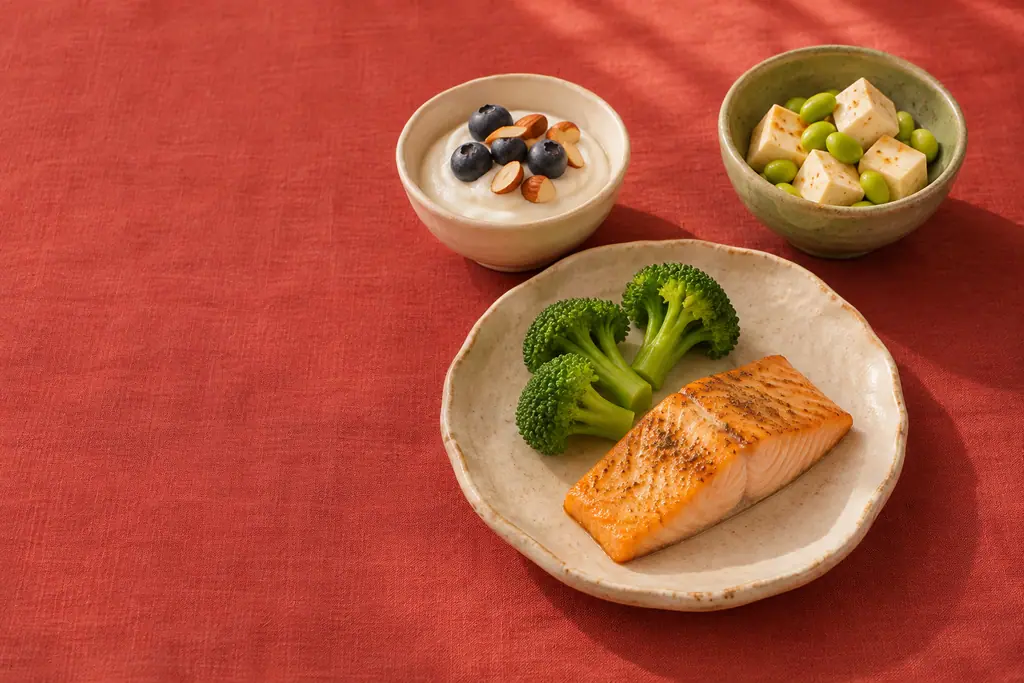
- Order an appetizer as your main: Shrimp cocktail, grilled chicken skewers, seared fish bites, edamame, or a cup of broth-based chicken or lentil soup gives you clean protein without a giant platter [2].
- Ask for the lunch portion or a half-order: MedlinePlus notes that many restaurants happily serve lunch-sized portions or half-plates when you ask [2].
- Split an entrée and add a vegetable side: Share a grilled salmon or chicken dish with a partner and order steamed broccoli or a side salad with dressing on the side [2].
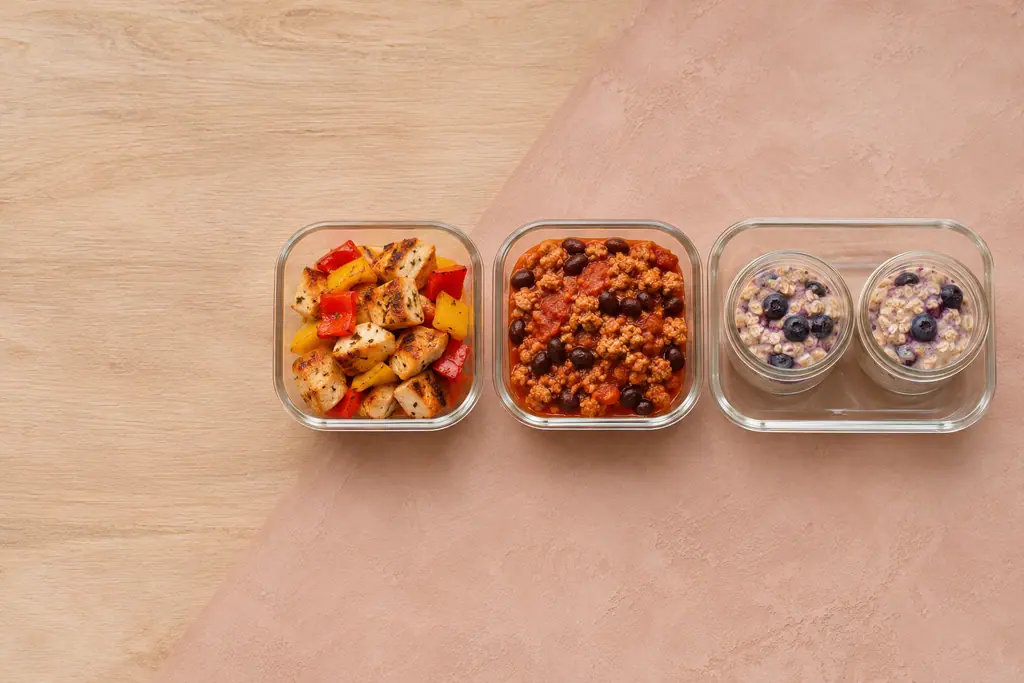
- Ask for a to-go box right away (or at halftime): Box half of your entrée as soon as you feel comfortably full [2] [3] — tomorrow’s lunch is already cooked. (If you are hosting family at home instead, see our One Kitchen, Two Plates guide.)
Eating protein first at the restaurant works just like it does at home: start with the fish, chicken, or shrimp while your appetite is freshest, and let the fries or bread wait.
Take-home box safety (do not leave it in the car)
When half of tonight’s grilled salmon or chicken turns into tomorrow’s lunch, USDA FSIS leftover rules keep it safe [4]:
- The 2-hour clock starts when food is served: Refrigerate perishable restaurant leftovers within 2 hours — or within 1 hour if outdoor or car temperatures are above 90°F [4]. If you are heading to a movie or errands after dinner, skip taking the meat or seafood home.
- 3 to 4 days in the fridge: Eat refrigerated cooked leftovers within 3 to 4 days and reheat them to 165°F before eating [4].
Restaurant-style plates you can make at home in 6 to 13 minutes
On nights when going out feels like too much noise or too much richness, these small plates bring the same fresh flavors home with exact USDA-calculated protein:
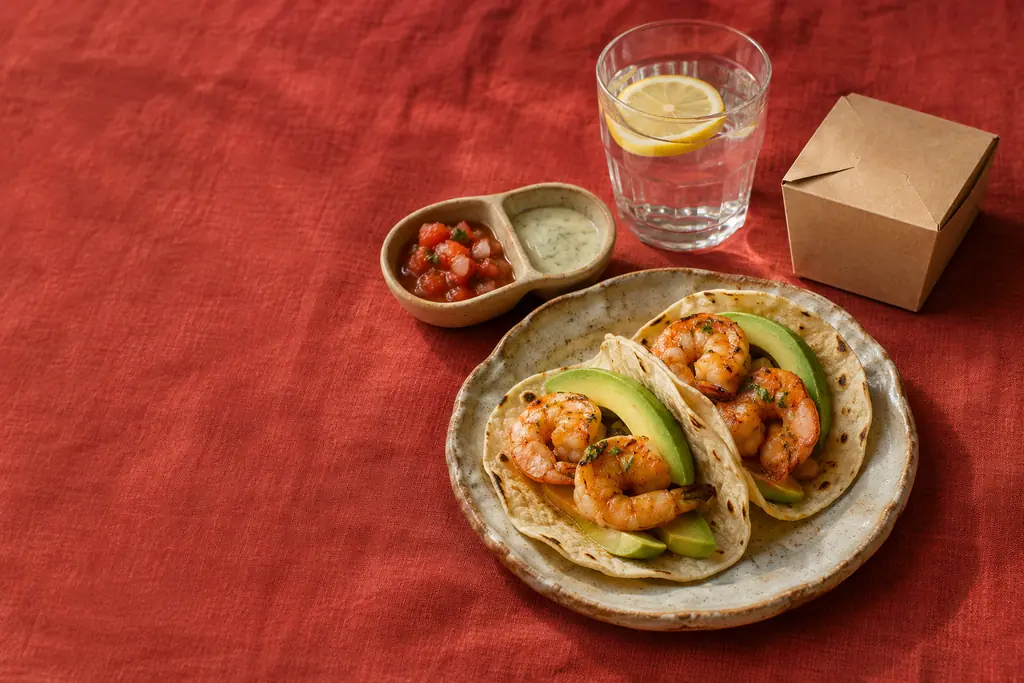
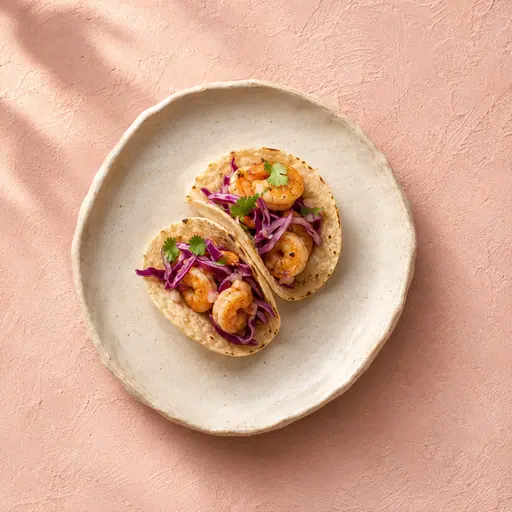
- Two Shrimp & Avocado Tacos (24 g protein, 6 g fiber, 8 min)
- Salmon & Rice Bowl (25 g protein, 7 min)
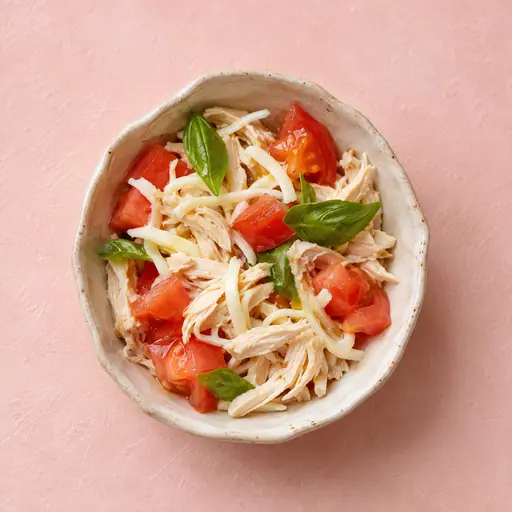
- No-Cook Rotisserie Chicken Caprese Bowl (27 g protein, 6 min)
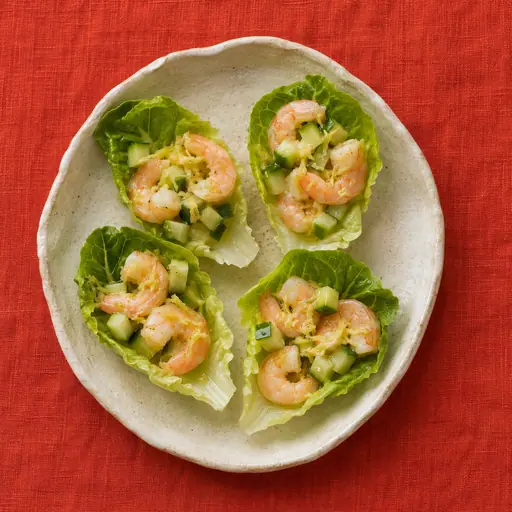
- Ginger Lime Shrimp Lettuce Cups (20 g protein, 8 min)
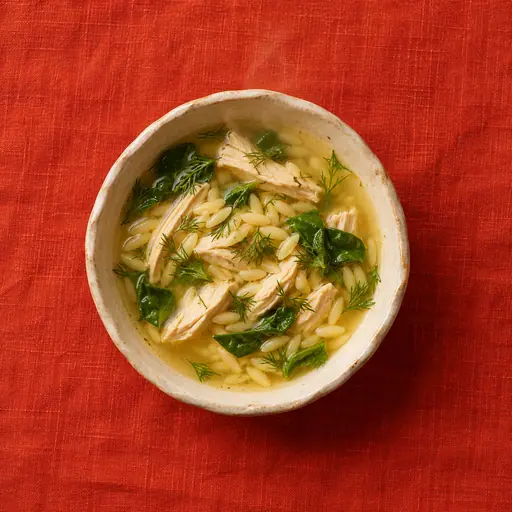
- Lemon Chicken & Orzo Soup (27 g protein, 13 min)
Want to balance a restaurant dinner with lighter, protein-rich plates earlier in the day? Check your daily target in our Protein calculator or generate today’s mini-meals in our free 1-day plan — and keep our Queasy-Day Food Guide handy if a rich meal ever leaves your stomach off balance.
Try this in your kitchen
Small plates that match this guide
Five restaurant-inspired small plates from our library — easy protein-first dinners and no-cook backups for nights you decide to stay in.
- Two Shrimp & Avocado Tacos For the rest of the family: add a pot of black beans and warm extra tortillas.
- Salmon & Rice Bowl For the rest of the family: add more rice and a tray of roasted broccoli.
- No-Cook Rotisserie Chicken Caprese Bowl
- Ginger Lime Shrimp Lettuce Cups
- Lemon Chicken & Orzo Soup For the rest of the family: make four bowls and add a tomato and cucumber salad.

Macros are calculated by code from USDA FoodData Central.
Common questions
What is the easiest thing to order at a restaurant when my appetite is small?
MedlinePlus dining-out guidance recommends ordering a lunch-size portion, choosing a protein-rich appetizer plus a broth-based soup or small side salad instead of a full entrée, or splitting an entrée with someone at the table. Grilled fish, baked chicken, shrimp, or lean meat with steamed or roasted vegetables sits far more comfortably than heavy pasta or fried platters.
How can I check protein, fat, and sodium before ordering at a chain restaurant?
Under FDA menu labeling rules, chain restaurants and coffee shops with 20 or more locations must display calories on menus and menu boards — and must make additional written nutrition information (including saturated fat, sodium, dietary fiber, and protein) available on premises upon request. Many also post the full chart online so you can glance ahead.
Why do restaurant meals sometimes trigger nausea or reflux on a GLP-1?
Restaurant meals frequently use generous amounts of butter, oil, heavy cream, and frying — and the 2025 joint clinical advisory notes that greasy, fried, and high-fat foods slow digestion further and aggravate nausea or reflux, especially in large portions. Asking for grilled or baked preparation with sauces on the side prevents most rough evenings.
How soon do I need to refrigerate a restaurant take-home box?
According to USDA FSIS food-safety guidelines, refrigerate perishable restaurant leftovers within 2 hours — or within 1 hour if temperatures are above 90°F (such as a hot car). Eat refrigerated leftovers within 3 to 4 days and reheat them to 165°F.
Sources
Every health, nutrition, and food-safety claim in this guide links to a published advisory, peer-reviewed paper, or public agency document.
- Calories on the Menu — U.S. Food and Drug Administration (FDA) (2022)
- Eating out — MedlinePlus, National Library of Medicine (NIH) (2024)
- Nutritional priorities to support GLP-1 therapy for obesity: A joint advisory from the American College of Lifestyle Medicine, the American Society for Nutrition, the Obesity Medicine Association, and The Obesity Society — The American Journal of Clinical Nutrition / Obesity Pillars (2025)
- Leftovers and Food Safety — USDA Food Safety and Inspection Service (FSIS) (2024)