At a glance
- USDA FSIS advises eating refrigerated cooked food within 3 to 4 days, making a 3-day prep cycle both fresher and safer than 7-day fridge prep.
- Appetite and food preferences shift from day to day on a GLP-1; prepping modular protein bases (plus cold grab-and-go jars) prevents food aversion and waste.
- One-third of U.S. food goes uneaten (almost $3,000/year for a family of four per the EPA); shallow single-serve containers and day-one freezing stop spoilage.
- USDA FSIS confirms freezing itself does not destroy nutrients — so freezing half of a chili or meatball batch gives you instant future dinners.
Seven identical chicken-and-broccoli boxes fail on a GLP-1 appetite — and fail USDA fridge clocks too. Prep two flexible proteins for three days, and freeze the rest.
Classic fitness meal prep — spending three hours on Sunday lining up seven identical plastic containers of dry chicken and broccoli — almost always falls apart on a GLP-1 medication. By Wednesday, the smell of reheated broccoli feels impossible, your appetite wants something cold instead of hot, and half the fridge ends up in the trash.
It also runs straight into federal food-safety limits. The 3-Day Batch Method replaces Sunday marathons with 45 calm minutes twice a week, built around real fridge clocks and your actual appetite.
Why 3-day prep beats 7-day prep (safety + waste)
Two numbers explain why shorter, smaller batches save both money and stress:
- The 3-to-4-day fridge clock: USDA FSIS guidelines state that cooked leftovers — including roasted chicken, meatballs, chili, and cooked grains — should be eaten within 3 to 4 days in the refrigerator (at 40°F or below) or frozen [1] [3]. Prepping seven days of cooked boxes for the fridge is past the recommended window by Friday.
- Food waste adds up fast: The U.S. EPA estimates that one-third of all food in the United States goes uneaten, costing the average family of four almost $3,000 a year [4]. When your portions shrink, prepping smaller batches and freezing extras immediately keeps your grocery budget intact.
And if you worry that frozen prep loses nutrition, USDA FSIS puts that myth to rest: the freezing process itself does not destroy nutrients, and food held continuously at 0°F stays safe indefinitely (for best quality, enjoy frozen cooked poultry and meat dishes within 2 to 6 months) [2] [3].
The 45-minute 3-day prep blueprint
The 2026 modified Delphi consensus emphasizes structured small eating occasions across the day so protein stays consistent even when hunger cues are quiet [5]. Instead of assembling locked-in meals, prep four flexible building blocks that work cold or warm:
| Prep block | Time | What to prep (for 3 days) | Recipe anchor from our library |
|---|---|---|---|
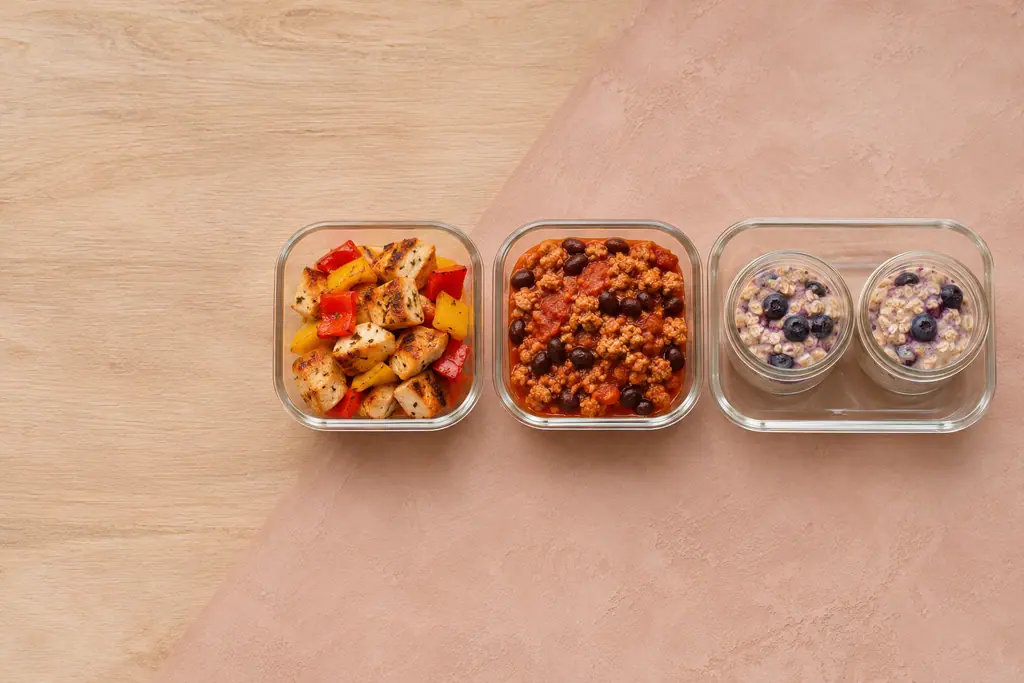
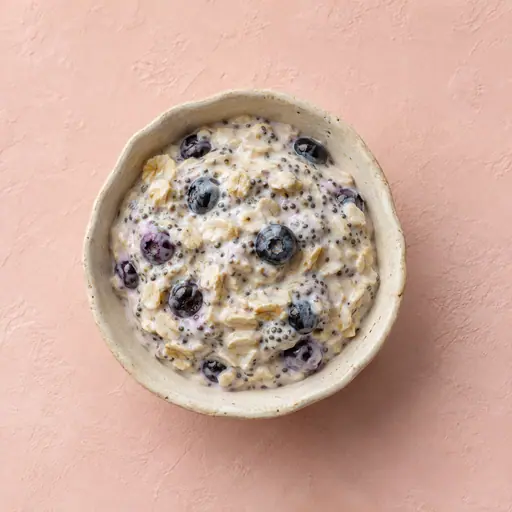
| 1. Grab-and-go mornings | 5–10 min | 2–3 lidded jars of overnight oats, OR one 6-cup muffin tin of egg muffins | High-Protein Blueberry Chia Overnight Oats (No Powder) or High-Protein Pepper & Feta Egg Muffins |
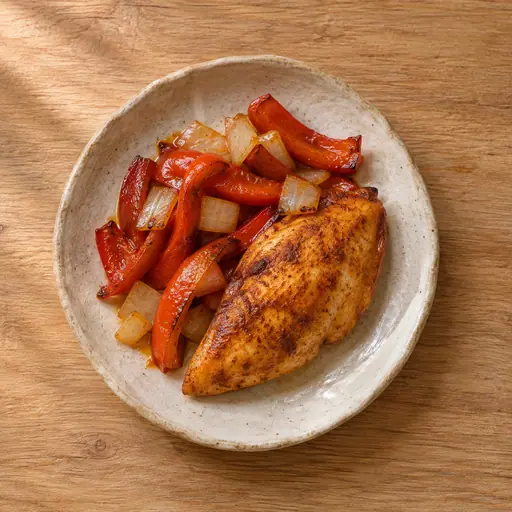
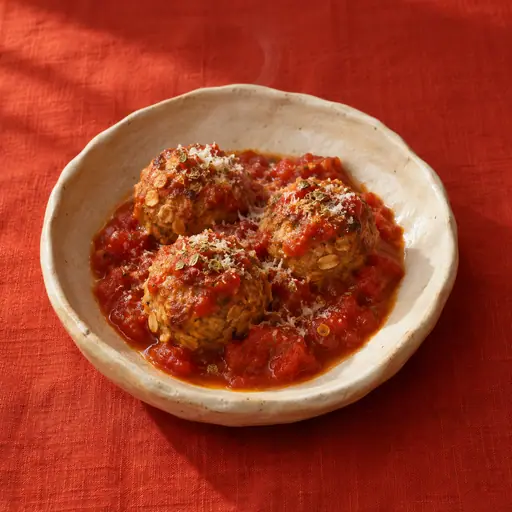
| 2. Mild sheet-pan protein | 25–30 min (hands-off oven) | One sheet pan of bite-size chicken or turkey meatballs — keep sauces separate so you can eat them warm, cold, or in a wrap | Sheet-Pan Paprika Chicken & Peppers or Turkey Meatballs in Tomato Sauce |
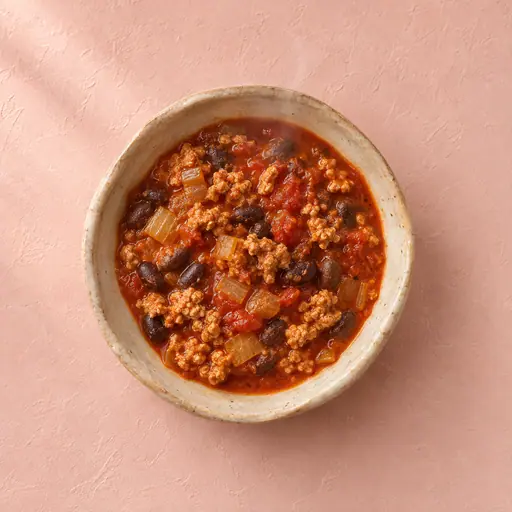
| 3. Freezer-friendly pot | 25 min | One pot of high-protein, high-fiber chili or soup: keep 2 small cups in the fridge and freeze the rest in single-serve containers on day one | One-Pot Turkey & Black Bean Chili |
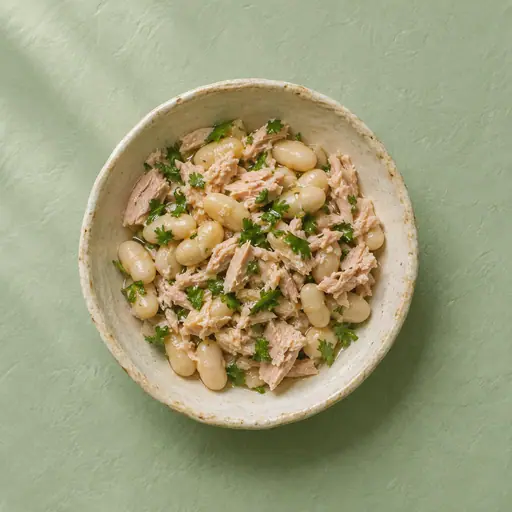
| 4. Zero-prep day-4 bridge | 6 min (made fresh) | Keep pantry fish and canned beans on standby for day 4 when fridge boxes run low | No-Cook Tuna & White Bean Protein Bowl |
Prep ingredients and mild bases, not rigid menus. Plain roasted chicken can become a warm bowl on Monday, a cold wrap on Tuesday, and a soothing soup cup on Wednesday.
Four small-portion prep habits that prevent flavor fatigue
- Use shallow 1-to-2-cup containers: USDA FSIS recommends dividing hot cooked food into shallow containers so it cools quickly in the fridge [1]. Those small containers also double as ready-to-eat single portions so you are not reheating the same big pot three times.
- Cool and refrigerate within 2 hours: Never leave prepped sheet pans or soup pots sitting on the counter all evening — USDA FSIS advises refrigerating perishable cooked food within 2 hours (or 1 hour if the kitchen is above 90°F) [1].
- Keep textures separate until eating: Pack crisp cucumbers, saltines, nuts, dressings, and sauces in tiny side cups so lunches stay fresh instead of soggy.
- Reheat thoroughly when serving warm: When warming prepped chicken, meatballs, or chili, USDA FSIS recommends reheating to an internal temperature of 165°F (and bringing soups and sauces to a rolling boil), stirring microwave dishes midway to eliminate cold spots [1].
Quick fridge & freezer reference for prepped staples
Keep this FoodSafety.gov chart on your fridge door (at 40°F or below / 0°F freezer) [3]:
- Hard-boiled eggs: 1 week in the fridge (do not freeze) [3]
- Cooked poultry, meat, soups, or chili: 3 to 4 days in the fridge; 2 to 6 months frozen for best quality [1] [3]
- Prepared tuna, chicken, or egg salad: 3 to 4 days in the fridge (do not freeze) [3]
- Opened deli turkey: 3 to 5 days in the fridge [3]
Pair this 3-day method with our Small-Portion Grocery List and One Kitchen, Two Plates if you also cook for family. Want to see how a full 7-day rotation flows without cooking every night? Preview our Sample week, check your daily target in the Protein calculator, or build today’s customized plates in our free 1-day plan.
Try this in your kitchen
Small plates that match this guide
Six prep-friendly recipes from our library — overnight jars, egg muffins, sheet-pan chicken, freezer-friendly chili, meatballs, and a 6-minute pantry bowl.
- High-Protein Blueberry Chia Overnight Oats (No Powder)
- High-Protein Pepper & Feta Egg Muffins
- Sheet-Pan Paprika Chicken & Peppers For the rest of the family: roast four portions and serve with warm corn tortillas and lime wedges.
- Turkey Meatballs in Tomato Sauce For the rest of the family: bake four portions and serve with pasta or a bowl of green beans.
- One-Pot Turkey & Black Bean Chili For the rest of the family: simmer four portions and serve with avocado and warm corn tortillas.
- No-Cook Tuna & White Bean Protein Bowl

Macros are calculated by code from USDA FoodData Central.
Common questions
Why does 7-day Sunday meal prep usually fail on a GLP-1 medication?
Two practical reasons: first, USDA FSIS guidelines state that cooked meat, poultry, and leftovers only stay safe in the refrigerator for 3 to 4 days — not a full week. Second, appetite and texture preferences can change from day to day, so staring at five identical reheated boxes often leads to tossing half of them.
How much food should I prep at once for a small appetite?
Prep for 2 to 3 days in the fridge: one batch of cold breakfast jars or egg muffins, one mildly seasoned cooked protein base (like sheet-pan chicken or turkey meatballs), and one soup or chili where half goes straight into single-portion freezer containers on day one.
Does freezing prepped high-protein meals reduce their nutrition?
No. USDA FSIS states clearly that the freezing process itself does not destroy nutrients, and cooked meat and poultry retain their nutrient value well in freezer storage (best quality for 2 to 6 months at 0°F).
What containers work best for small-portion GLP-1 meal prep?
Small, shallow glass containers (1 to 2 cups) do double duty: they match a real small-plate portion so reheating takes two minutes, and USDA FSIS notes that shallow containers cool hot leftovers much faster in the fridge.
Sources
Every health, nutrition, and food-safety claim in this guide links to a published advisory, peer-reviewed paper, or public agency document.
- Leftovers and Food Safety — USDA Food Safety and Inspection Service (FSIS) (2024)
- Freezing and Food Safety — USDA Food Safety and Inspection Service (FSIS) (2024)
- Cold Food Storage Chart — FoodSafety.gov (HHS / USDA / FDA) (2023)
- Preventing Wasted Food At Home — U.S. Environmental Protection Agency (EPA) (2025)
- Nutritional and lifestyle supportive care recommendations for management of obesity with GLP-1-based therapies: An expert consensus statement using a modified Delphi approach — Obesity Pillars (2026)