At a glance
- One-third of U.S. food goes uneaten; shrinking appetites turn bulk fresh produce and big meat packs into prime spoilage traps.
- Organize your cart by shelf life: long-lasting fresh staples (eggs last 3–5 weeks), frozen proteins and berries, and shelf-stable fish and beans.
- Use FoodSafety.gov cold-storage windows — 3–5 days for opened deli meat, 3–4 days for cooked chicken, 1 week for hard-boiled eggs — to choose package sizes.
- Use your browser's Print button to print this aisle-by-aisle checklist cleanly before your next store run.
Buy for the appetite you have this week — not the grocery cart you used to fill. Your freezer and pantry are your best waste-prevention tools.
One of the sneakiest surprises of eating smaller portions on a GLP-1 medication is watching your old grocery habits rot in the crisper drawer. A clamshell of baby spinach wilts before you use a third of it; a family pack of raw chicken breast expires on Thursday when nausea hits on Tuesday. Nationally, the U.S. EPA estimates that one-third of all food in the United States goes uneaten, costing the average family of four almost $3,000 a year [3].
When you eat half as much as you used to, the grocery store needs a new playbook — organized by aisle and real fridge shelf life instead of bulk-bin habits. (Tip: this page is print-styled, so hit Print in your browser for a clean paper checklist, or generate a custom aisle list for your exact day in our free 1-day plan.)
Your aisle-by-aisle, low-waste checklist
Pick 2 to 3 items per aisle so your fridge stays calm, varied, and finishable:
Dairy & eggs
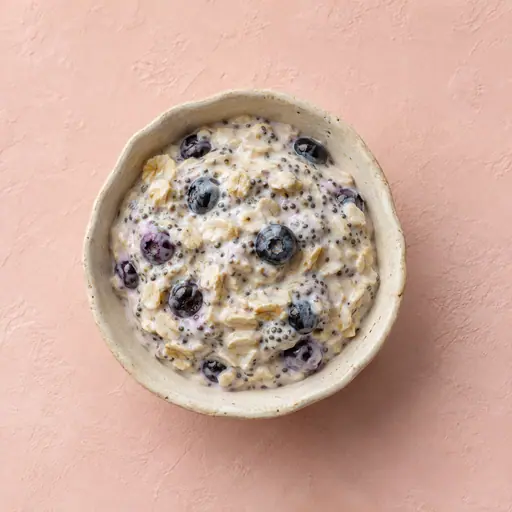
- Single-serve plain Greek yogurt cups (stay sealed until needed — base of Blueberry Greek Yogurt Bowl and Blueberry Lemon Overnight Oats)
- Small tub of cottage cheese (16 oz instead of 32 oz)
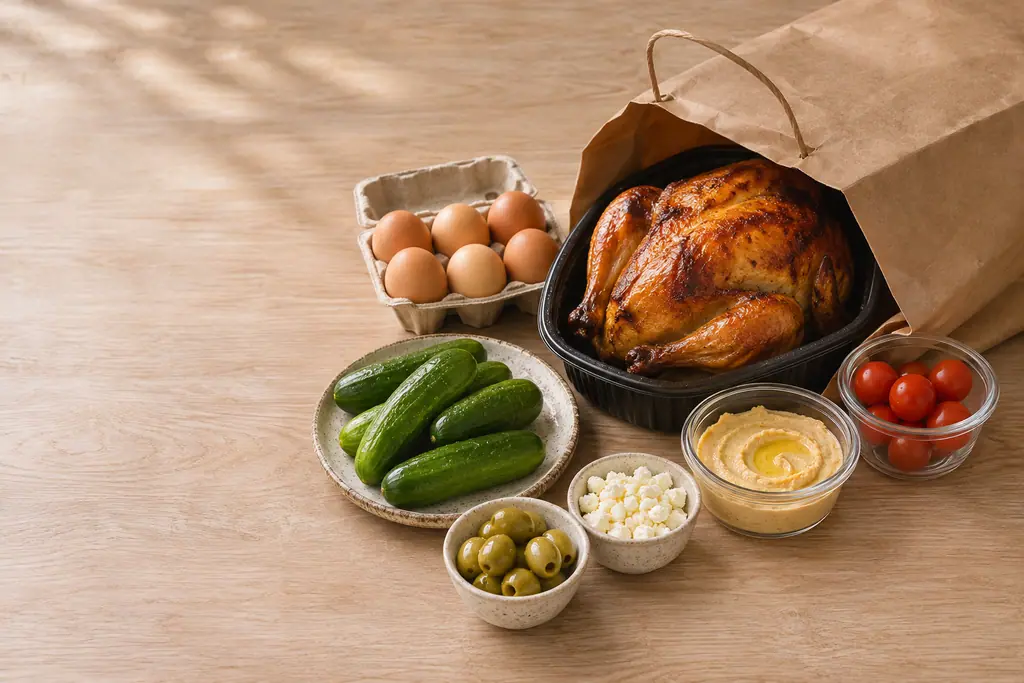
- Raw eggs in the shell (3 to 5 weeks in the fridge — workhorse for Spinach & Mozzarella Egg Bites) [1]
- Pre-portioned cheese sticks or thin slices (less mold than a giant open block)
Freezer (your waste-prevention MVP)
- Frozen shelled edamame (microwave one cup anytime for Warm Shelled Edamame Cup)
- Frozen cooked shrimp or individual salmon fillets (thaw only one small portion at a time)
- Frozen berries (blueberries, strawberries, raspberries) (zero moldy clamshells)
- Frozen green peas, spinach, or diced vegetables (stir a handful into eggs, broth, or bowls)
Pantry (months of shelf life)
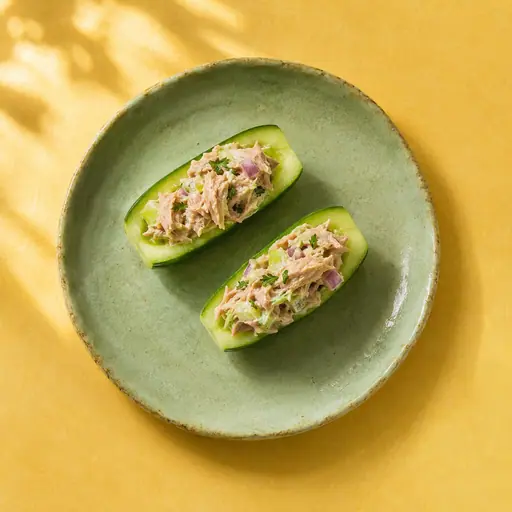
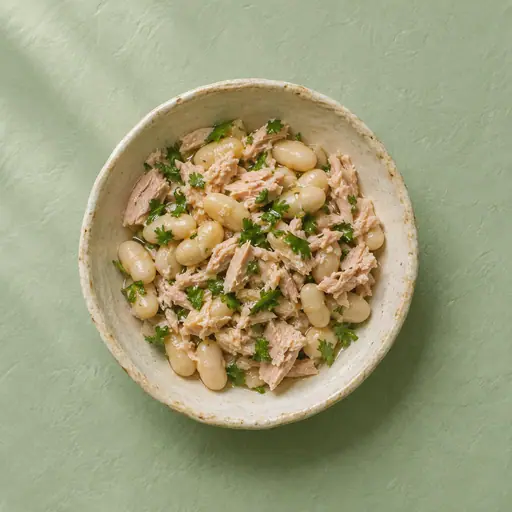
- Canned or pouch light tuna and salmon (6-minute lunches like Tuna & Cucumber Bites or Tuna & White Bean Salad)
- Canned white beans, black beans, lentils, and chickpeas (rinse and portion half a can at a time)
- Rolled oats, chia or hemp seeds, and small microwave rice cups
- Low-sodium chicken or vegetable broth cartons and plain saltines
Long-life produce & deli
- Sturdier produce: English cucumbers, baby carrots, apples, lemons, and bananas (buy 3 at a time, not a giant bunch)
- Small deli order: Ask the deli counter for 1/4 to 1/3 lb of sliced turkey instead of a full pound, since opened deli meat keeps 3 to 5 days [1]
Know your real fridge clocks
The official FoodSafety.gov Cold Food Storage Chart (with your refrigerator at 40°F / 4°C or below) shows exactly which foods to buy small and which ones quietly wait for you [1]:
| Grocery item | Fridge (40°F or below) | Freezer (0°F or below, best quality) | Small-portion buying move |
|---|---|---|---|
| Fresh raw chicken or turkey pieces | 1 to 2 days | 9 months | Freeze half the pack on day one, or buy pre-cooked frozen |
| Fresh fatty fish (salmon, tuna) | 1 to 3 days | 2 to 3 months | Buy individually frozen fillets or canned/pouch fish |
| Cooked meat or poultry (incl. rotisserie) | 3 to 4 days | 2 to 6 months | Shred half for this week, freeze half in mini-meal portions |
| Opened or deli-sliced luncheon meat | 3 to 5 days | 1 to 2 months | Order 1/4–1/3 lb at the counter instead of a pound |
| Hard-cooked (hard-boiled) eggs | 1 week | Do not freeze | Boil 4 to 6 at a time, not a whole dozen |
| Raw eggs in the shell | 3 to 5 weeks | Beat yolks & whites to freeze | Always-ready backup protein |
| Fresh shrimp | 3 to 5 days | 6 to 18 months | Keep a bag of frozen cooked shrimp and thaw 3 oz at a time |
Why frozen counts just as much as fresh
The USDA Food Safety and Inspection Service (FSIS) states clearly that the freezing process itself does not destroy nutrients, and that meat and poultry retain their nutrient value well during freezer storage [2]. Food stored continuously at 0°F stays safe indefinitely — the recommended freezer months are for best flavor and texture [1] [2].
Unit price is a trap if half the jumbo tub ends up in the garbage. Buy the size you can finish within four days of opening.
A 10-second FDA label check in the aisle
When comparing two yogurt cups, soups, or frozen options, the FDA Nutrition Facts label gives you two fast shortcuts [4]:
- Check the serving size first — especially on single-looking cups or cans that quietly list two servings [4].
- Use the 5% / 20% Daily Value rule: 5% DV or less per serving is low, and 20% DV or more per serving is high [4]. Look for higher %DV in dietary fiber, calcium, iron, potassium, and vitamin D, and lower %DV in added sugars, saturated fat, and sodium [4].
Next steps in your kitchen
- Confirm your daily protein goal in our Protein calculator, then generate a matching grocery list in our free 1-day plan.
- Put your groceries to work with Small-Portion GLP-1 Meal Prep and High-Protein GLP-1 Snacks.
Try this in your kitchen
Small plates that match this guide
Six low-waste meals built straight from single-serve dairy, frozen staples, eggs, and pantry cans.
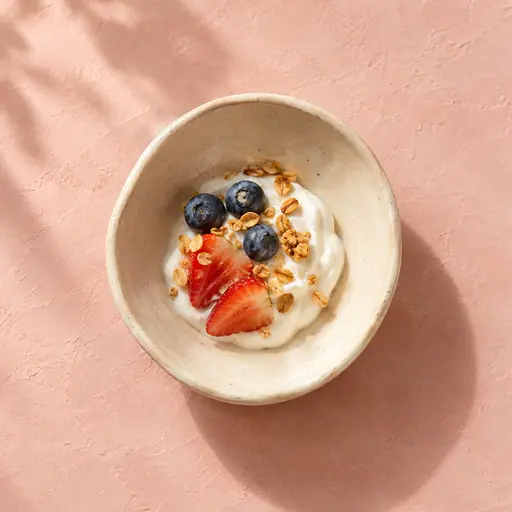
- High-Protein Blueberry Greek Yogurt Bowl
- Warm Shelled Edamame Cup
- Tuna & Cucumber Bites
- High-Protein Spinach & Mozzarella Egg Bites
- No-Cook Tuna & White Bean Protein Bowl
- High-Protein Blueberry Chia Overnight Oats (No Powder)


Macros are calculated by code from USDA FoodData Central.
Common questions
Why does so much produce and meat go bad after starting a GLP-1?
Most U.S. grocery packaging is sized for big portions, and the EPA estimates one-third of all U.S. food already goes uneaten. When your appetite drops by half — or a queasy day interrupts your dinner plan — 2-day fresh meat packs and giant salad clamshells spoil before you finish them.
Are frozen vegetables, berries, and seafood less nutritious than fresh?
No. USDA FSIS states clearly that the freezing process itself does not destroy nutrients, and meat and poultry retain their nutrient value well in freezer storage. Keeping frozen shrimp, salmon, edamame, and berries on hand lets you portion one small plate at a time with zero spoilage.
Is it cheaper to buy single-serve Greek yogurt cups or a giant 32-ounce tub?
A jumbo tub only saves money if you finish it before it spoils or dries out. If you eat smaller portions or skip dairy on queasy days, single-serve cups stay sealed until the morning you want one — preventing waste.
How can I quickly compare two packaged proteins in the grocery aisle?
Check the serving size on the FDA Nutrition Facts label first, then use the 5% / 20% Daily Value rule: 5% DV or less per serving is low, and 20% DV or more is high. Aim for higher fiber, calcium, iron, potassium, and vitamin D, and lower added sugars, saturated fat, and sodium.
Sources
Every health, nutrition, and food-safety claim in this guide links to a published advisory, peer-reviewed paper, or public agency document.
- Cold Food Storage Chart — FoodSafety.gov (HHS / USDA / FDA) (2023)
- Freezing and Food Safety — USDA Food Safety and Inspection Service (FSIS) (2024)
- Preventing Wasted Food At Home — U.S. Environmental Protection Agency (EPA) (2025)
- How to Understand and Use the Nutrition Facts Label — U.S. Food and Drug Administration (FDA) (2024)