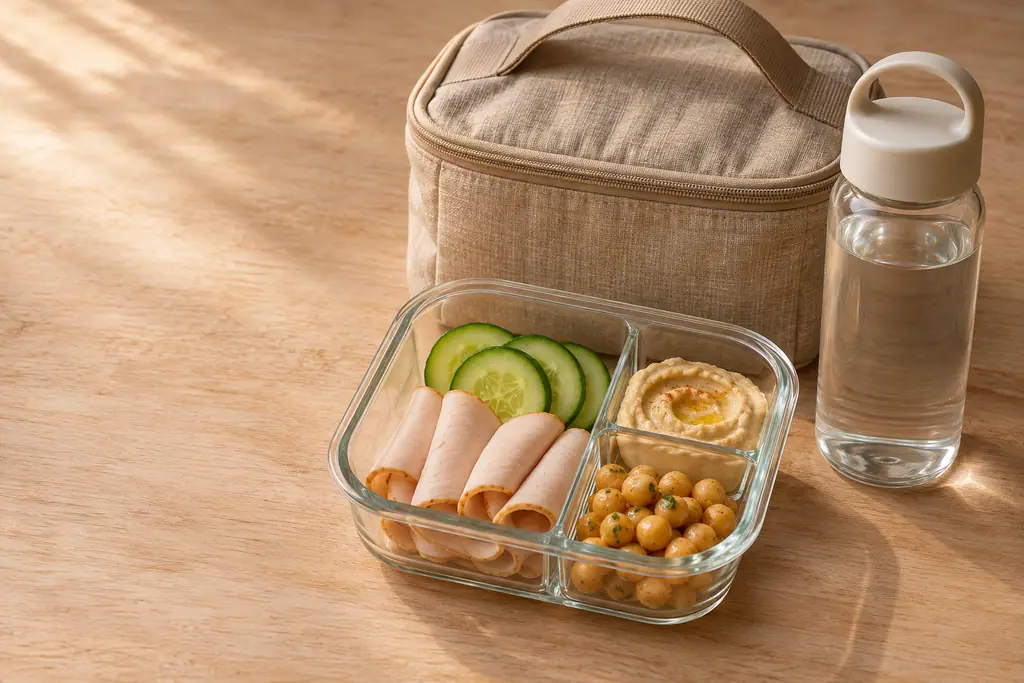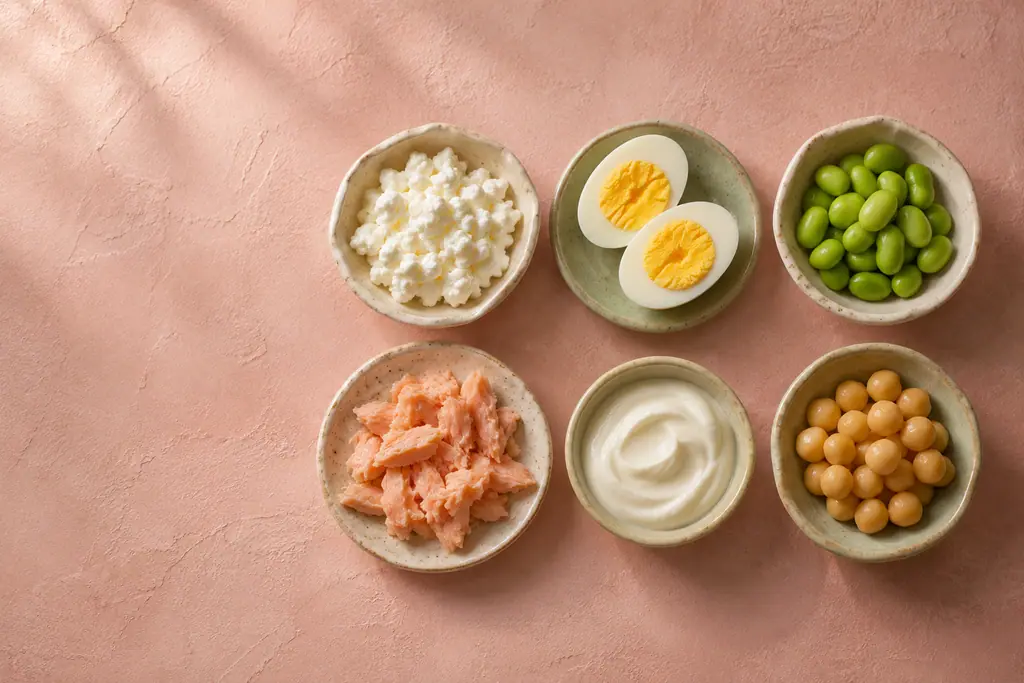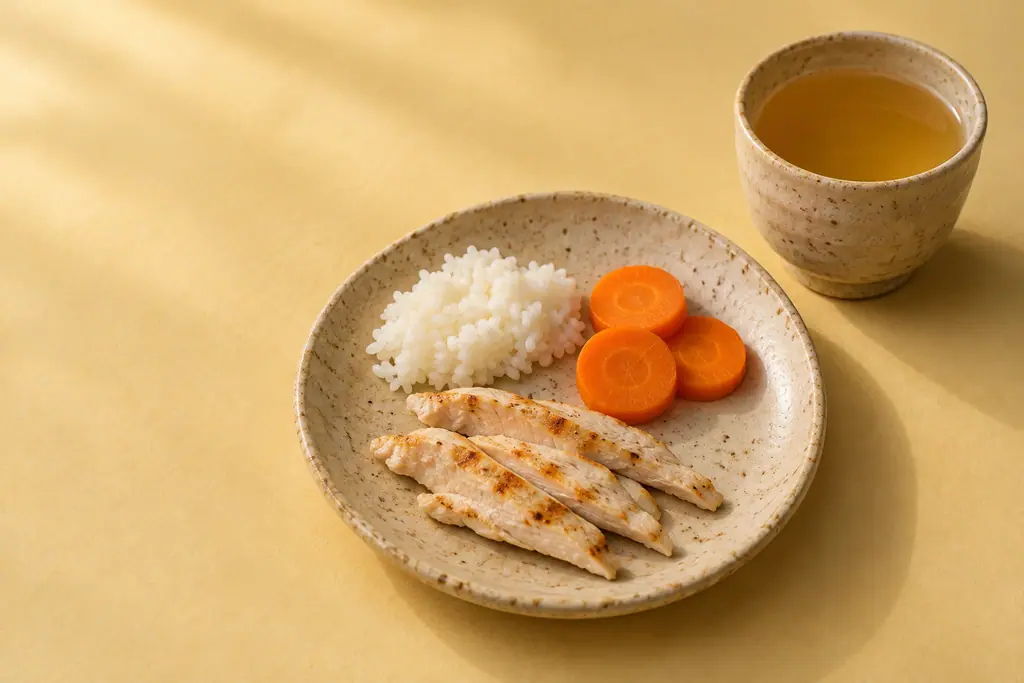
At a glance
- Keep meals small and lower in fat so food clears a slower GLP-1 stomach without pushing upward into the esophagus.
- Finish your evening plate at least 3 hours before lying down (NIDDK) and ask about elevating the head of your bed 6 to 8 inches for nighttime symptoms.
- Test NIDDK and ACG trigger categories personally (high-fat foods, tomatoes, citrus, spicy dishes, chocolate, caffeine, alcohol, and mint) rather than banning every food forever.
- Seek prompt medical care for alarm signs: chest pain, trouble or pain swallowing, persistent vomiting, or signs of digestive bleeding.
On a slower-emptying stomach, half of reflux relief is what you skip — and the other half is finishing a smaller, leaner dinner three hours before your head hits the pillow.
Waking up at 2 a.m. with a burning sensation behind your breastbone — or tasting dinner three hours after you put your fork down — is one of the most draining side effects of a slower-moving stomach. The American College of Gastroenterology (ACG) estimates that up to 20% of U.S. adults live with gastroesophageal reflux disease (GERD), and slower gastric emptying on a GLP-1 medication can turn even an ordinary evening meal into stubborn heartburn [4] [7].
The good news is that reflux responds quickly to practical kitchen tweaks: shrinking dinner volume, trimming heavy fat, moving your last meal earlier, and swapping out a handful of classic acid triggers while keeping your daily protein steady.
Why do smaller, lower-fat plates calm GLP-1 heartburn?
Gastroesophageal reflux happens when the ring of muscle at the bottom of the esophagus (the lower esophageal sphincter) weakens or relaxes when it should stay closed, letting stomach acid or food rise back upward [2] [6]. Two everyday kitchen habits raise pressure on that valve fast:
- Overfilling a slow stomach: A full-sized dinner sits in the stomach far longer on a GLP-1 medication. The 2025 joint clinical advisory recommends small, frequent meals every 3 to 4 hours — and avoiding greasy, fried, or high-fat foods — to calm upper gastrointestinal symptoms [7].
- Heavy fat content: Both NIDDK and the ACG flag high-fat and greasy foods as top reflux triggers [1] [4]. Fat slows gastric emptying even further and encourages the lower esophageal sphincter to relax.
Switching from a large, rich dinner to a compact, lean 20-to-27-gram protein plate removes half the mechanical pressure before you even change seasonings.
Which common triggers should you test — and what works instead?
The 2022 ACG Clinical Guideline emphasizes an encouraging rule: not everyone reacts to the same foods, so clinicians suggest identifying and avoiding your personal trigger foods rather than putting yourself on a miserable, permanent list of bans [5]. Start by watching the seven food and drink categories consistently listed by NIDDK and the ACG [1] [4]:
| Common NIDDK / ACG trigger | Why it often flares reflux | Calmer small-plate swap |
|---|---|---|
| High-fat, fried, or greasy meals | Slows stomach emptying and weakens the esophageal valve [1] [4] | Lean shredded poultry, shrimp, cod, egg whites, 1% cottage cheese, or nonfat Greek yogurt |
| Acidic foods (tomatoes, tomato sauce, citrus) | Can irritate an already sensitive esophageal lining [1] [4] | Broth-based soups, mashed potato bowls, plain applesauce, peaches, bananas, or melon |
| Spicy dishes and heavy black or chili pepper | Can directly irritate the esophagus [1] [4] | Mild herbs like parsley, basil, dill, cinnamon, or tiny amounts of fresh ginger |
| Coffee and other caffeinated drinks | Commonly linked to heartburn, especially on an empty stomach [1] [4] | Keep coffee modest, pair it with mild food, or switch afternoon mugs to decaf herbal blends (without mint) |
| Mint and peppermint | Specifically listed by NIDDK and ACG as a reflux trigger — even though mint is popular for nausea [1] [4] | Plain warm water, chamomile tea, or mild broth |
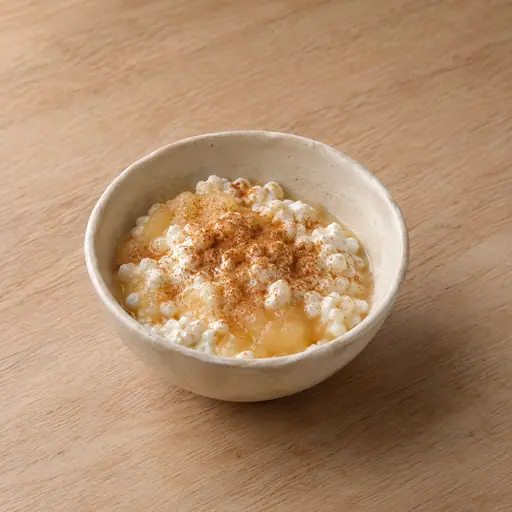
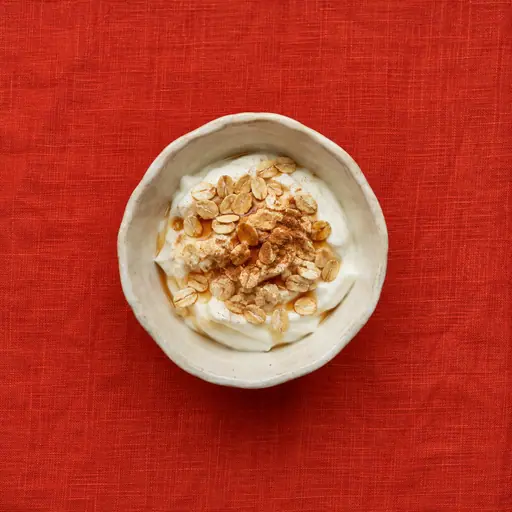
| Chocolate | Contains fat and compounds linked to valve relaxation [1] [4] | Cinnamon applesauce cottage cheese or maple-oat Greek yogurt for gentle sweetness |
| Alcoholic drinks | Relaxes the lower esophageal sphincter and irritates the lining [1] [4] | Still water or non-carbonated herbal infusions |
Watch the peppermint trap: If you read our Queasy-Day Food Guide, you know peppermint tea can feel soothing for pure nausea. When heartburn or sour regurgitation enters the picture, pause mint completely and see if your chest calms down [1] [4].
Six gentle, reflux-calming meals from our library
Every recipe below skips tomato sauce, citrus juice, cocoa, and chili heat while keeping fat modest and USDA-calculated protein strong:
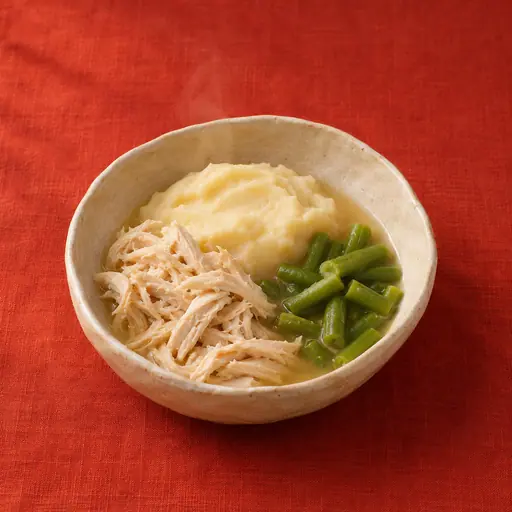
- Warm, brothy comfort: Gentle Chicken & Rice Soup Cup (Queasy-Safe) (22 g protein, 6 minutes) or Chicken & Mashed Potato Bowl (27 g protein, 2 g fiber, 8 minutes) — soft, low-grease evenings that clear comfortably.
- Cold, zero-acid spoons: High-Protein Apple Cinnamon Cottage Cheese Bowl (21 g protein, 3 minutes, no-cook) or High-Protein Maple Cinnamon Yogurt Oats (No Powder) (20 g protein, 3 g fiber, 3 minutes, no-cook) when you want calm sweetness without chocolate or citrus.
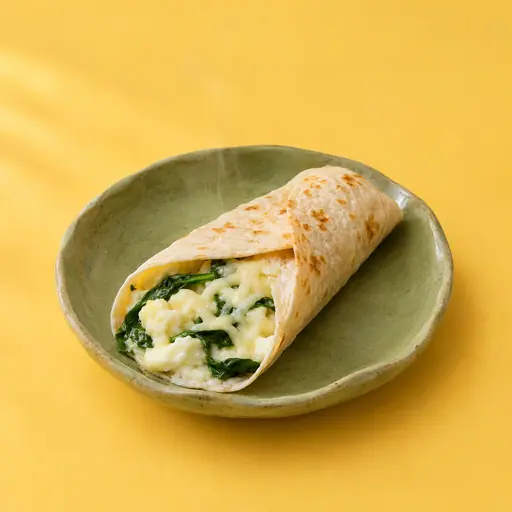
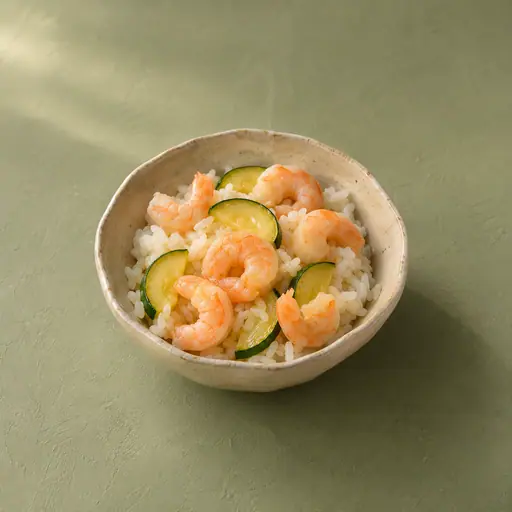
- Lean, mild wraps and seafood: Egg White & Spinach Wrap (22 g protein, 8 minutes) or Shrimp & Zucchini Rice Cup (22 g protein, 8 minutes) — tender, light-fat proteins that never sit like a stone.
How do meal timing and posture stop nighttime heartburn?
What happens after you put your fork down matters just as much as what was on your plate. Gravity is one of the strongest natural barriers against acid rising into the esophagus [4]. Build four simple evening habits supported by NIDDK and the ACG:
- Close the kitchen 3 hours before bed: NIDDK states clearly that eating meals at least 3 hours before lying down or going to bed may improve nighttime or lying-down reflux symptoms [1] (the ACG guideline similarly recommends avoiding meals within 2 to 3 hours of bedtime [4] [5]). If you go to bed at 10 p.m., aim to finish your last mini-meal by 7 p.m.
- Stay upright after every plate: Skip reclining on the sofa right after lunch or dinner. A calm 10-minute walk around the house or neighborhood uses gravity to your advantage.
- Skip tight waistbands after meals: The ACG notes that tight clothing around the abdomen adds upward pressure on the stomach and increases reflux [4].
- Elevate your upper body if nighttime reflux persists: Both NIDDK and the ACG recommend inclining your head and upper torso during sleep — using an under-mattress or foam wedge that raises your head 6 to 8 inches (ACG notes 6 to 10 inches; piling loose regular pillows only bends your neck without keeping your esophagus inclined) [3] [4].
Move your biggest protein anchors to morning, midday, and mid-afternoon so dinner can stay light, lean, and done three hours before sleep.
If you eat at restaurants with friends or family, pair these habits with our Eating Out on a GLP-1 guide so heavy sauces and late baskets of bread do not derail your night.
When should you call a doctor about acid reflux?
Occasional heartburn after a richer meal is common, but frequent symptoms — two or more times a week — or symptoms that do not improve with lifestyle adjustments deserve a conversation with your doctor [2] [4] [6]. NIDDK also notes that over-the-counter antacids, H2 blockers, and proton pump inhibitors (PPIs) carry specific pros, cons, and side effects (antacids, for instance, can cause constipation or diarrhea, and daily use should be discussed with your doctor) [3].
Seek medical care right away for any alarm symptom listed by NIDDK, MedlinePlus, and the ACG [2] [5] [6]:
- Chest pain — get emergency medical help immediately if chest pain comes with shortness of breath or pain in your jaw or arm, as these can signal a heart problem [6]
- Trouble swallowing (dysphagia) or pain while swallowing (odynophagia) [2] [5]
- Persistent or recurrent vomiting [2] [5]
- Signs of digestive tract bleeding, such as vomit containing blood or looking like coffee grounds, or bloody or black, tarry stools [2]
- Unexplained changes in body weight or ongoing loss of appetite [2]
Next steps in your kitchen
- Build a calm, smaller-plate day with one-tap gentle swaps inside our free 1-day plan, or check your daily protein range in our Protein calculator.
- Keep reading: What to Eat When You Feel Nauseous on a GLP-1, Fiber and Fluids on a GLP-1, and Eating Out on a GLP-1.
Try this in your kitchen
Small plates that match this guide
Six mild, low-acid, lower-fat small plates from our library — zero tomato sauce, citrus juice, cocoa, or chili heat, with 20 to 27 g of USDA protein each.
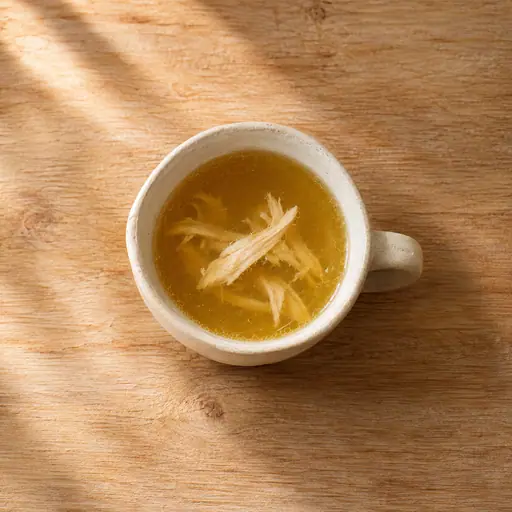
- Gentle Chicken & Rice Soup Cup (Queasy-Safe) For the rest of the family: add dinner rolls and a side of green beans.
- Chicken & Mashed Potato Bowl For the rest of the family: serve with roasted carrots and dinner rolls.
- High-Protein Apple Cinnamon Cottage Cheese Bowl
- High-Protein Maple Cinnamon Yogurt Oats (No Powder)
- Egg White & Spinach Wrap
- Shrimp & Zucchini Rice Cup For the rest of the family: add extra rice and a pan of roasted zucchini.
Macros are calculated by code from USDA FoodData Central.
Common questions
Why does acid reflux or heartburn flare up on a GLP-1 medication?
GLP-1 medications slow how quickly food leaves the stomach. When a larger, fattier, or late-night meal sits in the stomach longer than usual, upward pressure makes it easier for stomach contents to flow back through the lower esophageal sphincter into the esophagus, causing heartburn or sour regurgitation.
How long should I wait after dinner before lying down to prevent reflux?
The NIDDK advises eating meals at least 3 hours before lying down or going to bed if you experience nighttime or lying-down reflux, and the American College of Gastroenterology (ACG) similarly recommends avoiding meals within 2 to 3 hours of bedtime.
Is peppermint tea good for GLP-1 heartburn?
Be careful with mint if reflux is your main symptom. While peppermint tea is sometimes used for general nausea, both NIDDK and the ACG specifically list mint and peppermint as common triggers that can worsen acid reflux by relaxing the muscle at the bottom of the esophagus. Plain warm water, mild broth, or weak ginger tea without citrus is often gentler for reflux.
Do I have to eliminate tomatoes, coffee, and chocolate forever?
Not necessarily. The 2022 ACG Clinical Guideline emphasizes targeting individual trigger foods that provoke your own symptoms rather than enforcing a blanket permanent ban on every possible trigger. Keep brief notes for a week to spot which foods actually bother you.
Which heartburn or reflux symptoms require calling a doctor right away?
Both NIDDK and MedlinePlus advise seeing a doctor if reflux occurs two or more times a week or does not improve with lifestyle changes, and seeking immediate medical care for chest pain (especially with shortness of breath or jaw/arm pain), difficulty or pain while swallowing, persistent vomiting, bloody or coffee-ground vomit, or black tarry stools.
Sources
Every health, nutrition, and food-safety claim in this guide links to a published advisory, peer-reviewed paper, or public agency document.
- Eating, Diet, & Nutrition for GER & GERD — National Institute of Diabetes and Digestive and Kidney Diseases (NIDDK, NIH) (2020)
- Symptoms & Causes of GER & GERD — National Institute of Diabetes and Digestive and Kidney Diseases (NIDDK, NIH) (2020)
- Treatment for GER & GERD — National Institute of Diabetes and Digestive and Kidney Diseases (NIDDK, NIH) (2020)
- Acid Reflux / GERD Patient Overview — American College of Gastroenterology (ACG) (2024)
- ACG Clinical Guideline for the Diagnosis and Management of Gastroesophageal Reflux Disease — The American Journal of Gastroenterology (Katz et al.) (2022)
- GERD (Gastroesophageal Reflux Disease) — MedlinePlus, National Library of Medicine (NIH) (2025)
- Nutritional priorities to support GLP-1 therapy for obesity: A joint advisory from the American College of Lifestyle Medicine, the American Society for Nutrition, the Obesity Medicine Association, and The Obesity Society — The American Journal of Clinical Nutrition / Obesity Pillars (2025)