At a glance
- Clinical advisories propose 1.2–1.6 g/kg/day (or roughly 80–120 g/day) during active GLP-1 therapy — and 102 of our 110 library recipes hit that goal with zero protein powder.
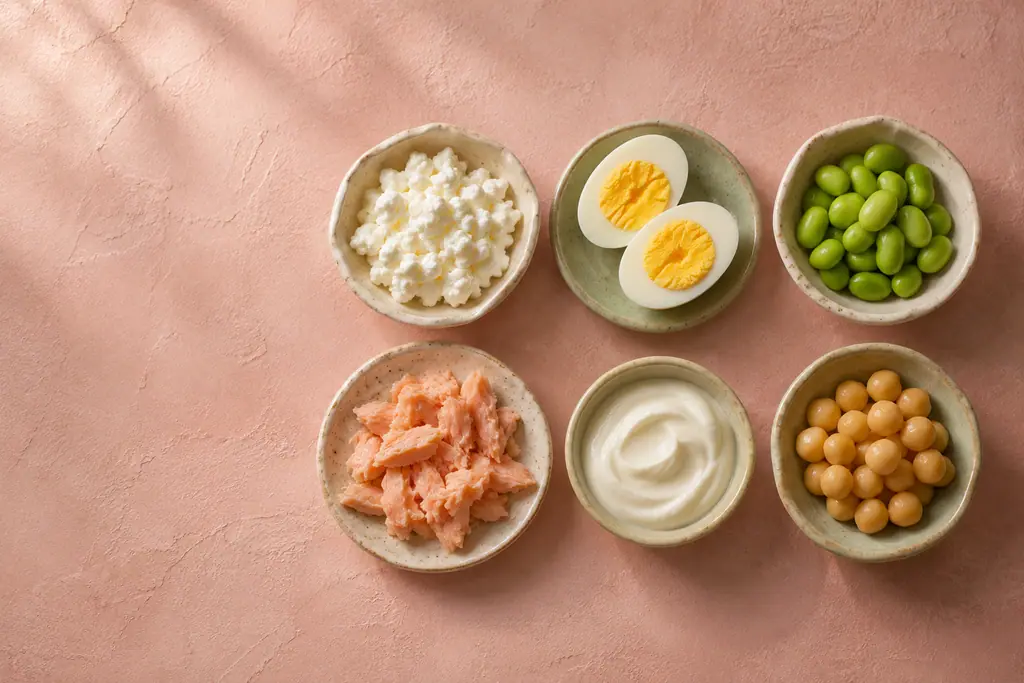
- Use compact, whole-food protein anchors (Greek yogurt, cottage cheese, eggs, poultry, fish, tofu, and edamame) delivering 17 to 24 g of USDA protein in small portions.
- Quietly boost real plates by 6 to 13 grams using liquid egg whites, hemp hearts, ricotta, or blended cottage cheese instead of flavored powders.
- Anyone with chronic kidney disease should confirm an individualized protein target with their doctor or renal dietitian first.
You do not have to choke down chalky, overly sweet shakes to protect muscle on a GLP-1. Four modest plates of ordinary dairy, eggs, fish, poultry, and tofu hit 95+ grams naturally.
Scroll social media for five minutes and you might think surviving on a GLP-1 requires drinking two sweet vanilla shakes a day and stirring chalky whey powder into your morning coffee. If you cannot stand the aftertaste of artificial sweeteners, hate washing blender bottles, or simply want to chew real food, here is reassuring news: shakes are optional, never required.
In fact, 102 of the 110 recipes in our library contain zero protein powder and zero shakes — and still land squarely in the 17-to-28-gram range per small plate. Here is how to reach your daily target comfortably using ordinary grocery-store foods.
How much real-food protein do you actually need?
While the baseline Recommended Dietary Allowance for general adults is 0.8 g/kg/day, the 2025 joint clinical advisory (ACLM, ASN, OMA, and TOS) proposes 1.2 to 1.6 grams of protein per kilogram of reference body weight per day — or a practical absolute benchmark of 80 to 120 grams daily — during active weight reduction to help protect lean muscle [1]. The 2026 modified Delphi expert consensus similarly cites 1.2 to 1.5 g/kg/day [2]. (If you want the pound-to-kilogram conversion worked out for your reference weight, check our GLP-1 Protein Math guide or plug your numbers into our Protein calculator.)
Crucially, the 2025 joint advisory places whole, nutrient-dense protein foods first — specifically naming fish, eggs, Greek yogurt, cottage cheese, lean poultry, beans, lentils, and nuts or seeds — while viewing shakes purely as an optional backup when solid food feels too hard [1]. Eating real foods also brings along calcium, iron, potassium, B vitamins, and fiber that isolated protein powders leave behind [1] [6].
How much protein fits in a small portion of real food?
When your appetite is half its usual size, protein density per bite is what counts. Every single number in the table below is calculated directly from our USDA FoodData Central ingredient dataset — no rounded estimates or guesswork [3]:
| Real-food staple | Small-plate serving | USDA protein | USDA fiber | Kitchen note |
|---|---|---|---|---|
| Skinless rotisserie chicken breast | 3 oz shredded (85 g) | 23.8 g | 0 g | Ready-cooked; works cold in bowls or warm in broth |
| Pork tenderloin | 4 oz (113 g) | 23.7 g | 0 g | One of the leanest tender skillet proteins |
| Atlantic salmon fillet | 4 oz (113 g) | 23.1 g | 0 g | Flakes gently; easy to chew when appetite is low |
| Firm calcium-set tofu | 1/2 cup diced (126 g) | 21.8 g | 2.9 g | Neutral flavor; works scrambled, souped, or chilled |
| No-salt-added light tuna, drained | 3 oz drained (85 g) | 21.7 g | 0 g | Pantry-ready; mixes smoothly with Greek yogurt |
| 1% cottage cheese | 3/4 cup (170 g) | 21.1 g | 0 g | Spoon cold sweet or savory (1/2 cup gives 14.0 g) |
| Canned pink salmon, drained | 3 oz drained (85 g) | 20.9 g | 0 g | Mild, zero cooking needed |
| Atlantic cod fillet | 4 oz (113 g) | 20.1 g | 0 g | Very light, flaky white fish |
| Frozen cooked peeled shrimp | 3 oz thawed (85 g) | 19.4 g | 0 g | Thaws in minutes; zero food waste |
| Frozen shelled edamame | 1 cup shelled (155 g) | 18.4 g | 8.1 g | High plant protein plus serious fiber |
| Lower-sodium deli turkey breast | 3 slices (84 g) | 18.3 g | 0.4 g | Fast no-cook roll-ups or mini wraps |
| Plain cooked lentils | 1 cup cooked (198 g) | 17.9 g | 15.6 g | Soft, hearty soup or mash base |
| Plain nonfat Greek yogurt | 1 single-serve cup (170 g) | 17.3 g | 0 g | Base for oats, dips, and fruit bowls |
| Part-skim ricotta | Scant 2/3 cup (150 g) | 17.1 g | 0 g | Ultra-soft spoonable texture |
| Liquid egg whites | 1/2 cup (122 g) | 13.3 g | 0 g | Doubles egg-scramble protein with almost zero bulk |
| Large eggs | 2 large (100 g) | 12.6 g | 0 g | Boil 4–6 ahead for instant grab-and-go |
| Hemp hearts | 2 1/2 tablespoons (25 g) | 7.9 g | 1.0 g | Mild nutty topper for oats, yogurt, or soups |
| Sliced sharp cheddar | 1 oz (28 g) | 6.8 g | 0 g | Easy sidekick for eggs, apples, or crackers |
Two realistic shake-free days (~98 to 101 g protein)
Seeing how four modest plates stack together takes all the mystery out of skipping powders. Both days below use real meals straight from our library with USDA-calculated macros [3]:
Day A: Mostly no-cook, cold-friendly (101 g protein · 19 g fiber)
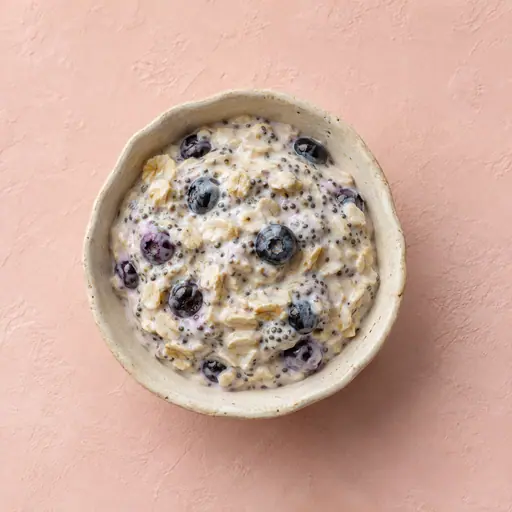
- Morning: High-Protein Blueberry Chia Overnight Oats (No Powder) — 21 g protein, 7 g fiber (uses plain Greek yogurt and milk instead of whey)
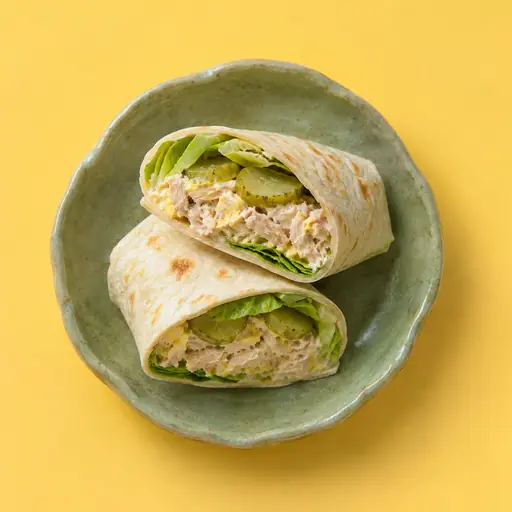
- Midday: Tuna Dill Pickle Mini Wrap — 28 g protein, 2 g fiber (6 minutes, no-cook)
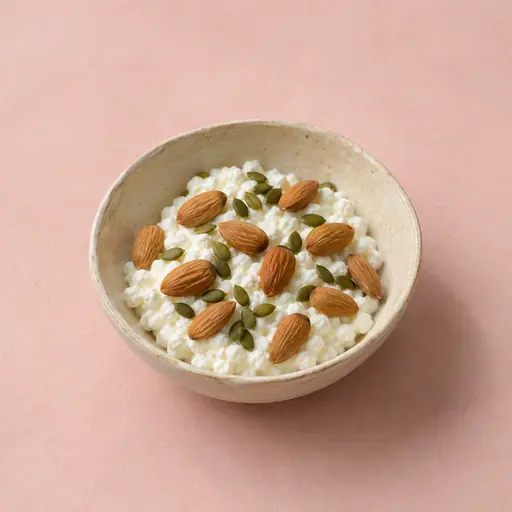
- Afternoon: High-Protein Cottage Cheese, Pepita & Almond Bowl — 24 g protein, 2 g fiber (3 minutes, no-cook)
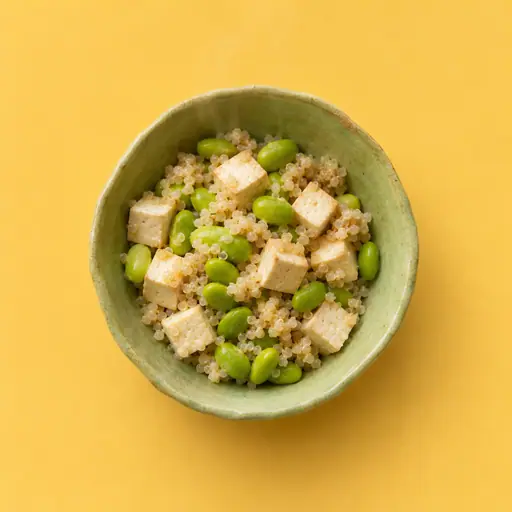
- Evening: Tofu & Edamame Quinoa Bowl — 28 g protein, 8 g fiber (8 minutes)
Day B: Savory, warm-and-crisp (98 g protein · 12 g fiber)
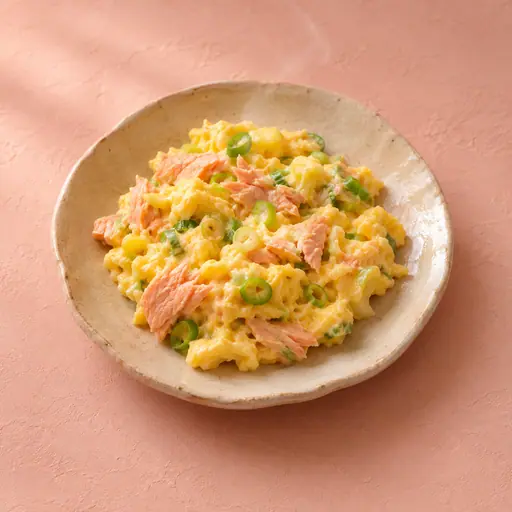
- Morning: Salmon & Scallion Scramble — 27 g protein (9 minutes)
- Midday: No-Cook Rotisserie Chicken Caprese Bowl — 27 g protein, 1 g fiber (6 minutes)
- Afternoon: Warm Shelled Edamame Cup — 18 g protein, 8 g fiber (6 minutes)
- Evening: Sheet-Pan Salmon & Broccoli — 26 g protein, 3 g fiber (30 minutes hands-off oven)
Notice the secret: you never need a giant 40-gram steak at dinner when every small eating moment quietly carries 18 to 28 grams of real food.
Four quiet ways to add 6 to 13 grams of protein without powder
When a favorite bowl falls slightly short of 20 grams, skip the scoop of chalky vanilla powder and use one of these real-food boosters (all USDA-calculated from our dataset) [3]:
- Stir liquid egg whites into whole eggs: Adding 1/2 cup of liquid egg whites contributes 13.3 grams of protein while keeping scrambled eggs or egg bites light and tender.
- Top oats, yogurt, or soup with hemp hearts: 2 1/2 tablespoons of hemp hearts add 7.9 grams of protein with a soft, mild crunch that disappears easily into bowls.
- Swap mayonnaise or sour cream for plain nonfat Greek yogurt: Using 1/3 cup (85 g) of Greek yogurt as your base for chicken salad, tuna salad, or herb dip quietly adds 8.7 grams of protein while keeping fat lower.
- Combine plant staples across the day: Pairing beans or lentils with tofu, edamame, seeds, or cheese lifts plant-forward meals past 20 grams cleanly. MedlinePlus confirms you do not need to obsess over combining specific amino acids in one sitting — eating varied protein foods across the day provides what your body needs [4].
When to check your protein target with your care team
Higher protein targets are not right for everyone. The NIDDK explains that as the body breaks down protein, it generates waste products filtered by the kidneys — meaning adults with chronic kidney disease (CKD) often need moderate, individually balanced protein limits set with their doctor or registered dietitian [5]. Check your personal range with your care team if you have kidney disease, diabetes, or are pregnant or breastfeeding [1] [5].
Next steps in your kitchen
- Calculate your personalized pound-to-kilogram target in our Protein calculator and generate a shake-free day in our free 1-day plan.
- Keep reading: How to Get Enough Protein When You Have No Appetite, GLP-1 Protein Math, and GLP-1 Breakfast Ideas.
Try this in your kitchen
Small plates that match this guide
Six 100% powder-free, shake-free plates from our library — delivering 21 to 28 grams of USDA-calculated protein per compact serving.
- High-Protein Blueberry Chia Overnight Oats (No Powder)
- Salmon & Scallion Scramble
- High-Protein Cottage Cheese, Pepita & Almond Bowl
- Tuna Dill Pickle Mini Wrap
- Tofu & Edamame Quinoa Bowl For the rest of the family: add more quinoa and a tray of roasted vegetables.
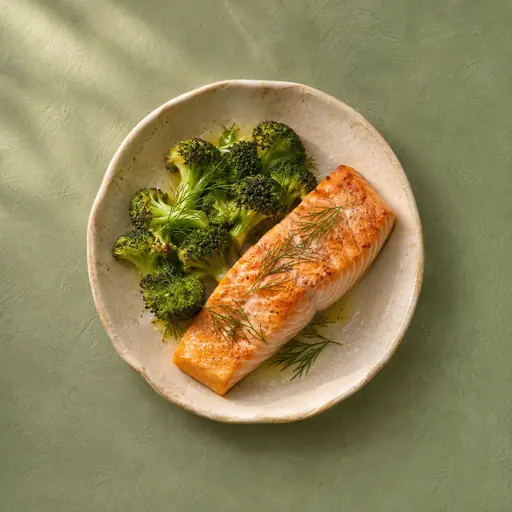
- Sheet-Pan Salmon & Broccoli For the rest of the family: roast four fillets with the broccoli and add a pot of rice.
Macros are calculated by code from USDA FoodData Central.
Common questions
Can I really get 80 to 100 grams of protein a day on a GLP-1 without protein shakes?
Yes. Four compact real-food mini-meals delivering roughly 21 to 28 grams each — such as Greek yogurt overnight oats, a mini tuna wrap, a cottage cheese bowl with seeds, and a small salmon or tofu bowl — easily add up to 95 to 101 grams of USDA-calculated protein without a single scoop of powder.
Why do protein shakes start tasting awful on a GLP-1 medication?
Taste preferences often shift when appetite drops, and many commercial shakes rely on intense sweetness, thick gums, or artificial flavors that feel cloying when your stomach is already sensitive. Switching to savory or mildly tangy whole foods (cottage cheese, eggs, fish, edamame, poultry) eliminates sweet fatigue immediately.
Which whole foods pack the most protein into the smallest bite?
Based on our USDA FoodData Central food table, skinless rotisserie chicken breast (23.8 g per 3 oz), drained light tuna (21.7 g per 3 oz), firm tofu (21.8 g per 1/2 cup diced), 1% cottage cheese (21.1 g per 3/4 cup), cooked shrimp (19.4 g per 3 oz), and plain nonfat Greek yogurt (17.3 g per single-serve cup) deliver high protein in very modest volume.
Do plant proteins count if I avoid dairy or meat?
Absolutely. Firm tofu (21.8 g per 1/2 cup), shelled edamame (18.4 g per cup), cooked lentils (17.9 g per cup), white beans (13.0 g per 3/4 cup), and hemp hearts (7.9 g per 2 1/2 tbsp) stack cleanly. MedlinePlus notes that eating varied protein foods across the day supplies all essential amino acids without needing special combining rules at every meal.
Should everyone on a GLP-1 aim for 1.2 to 1.6 g/kg of protein?
No target fits every medical history. The NIDDK notes that protein creates waste products filtered by the kidneys, so adults with chronic kidney disease may need moderate, personalized limits set with their doctor or registered dietitian.
Sources
Every health, nutrition, and food-safety claim in this guide links to a published advisory, peer-reviewed paper, or public agency document.
- Nutritional priorities to support GLP-1 therapy for obesity: A joint advisory from the American College of Lifestyle Medicine, the American Society for Nutrition, the Obesity Medicine Association, and The Obesity Society — The American Journal of Clinical Nutrition / Obesity Pillars (2025)
- Nutritional and lifestyle supportive care recommendations for management of obesity with GLP-1-based therapies: An expert consensus statement using a modified Delphi approach — Obesity Pillars (2026)
- USDA FoodData Central — USDA Agricultural Research Service (2026)
- Protein in diet — MedlinePlus Medical Encyclopedia, National Library of Medicine (NIH) (2024)
- Healthy Eating for Adults with Chronic Kidney Disease — National Institute of Diabetes and Digestive and Kidney Diseases (NIDDK, NIH) (2025)
- How to Understand and Use the Nutrition Facts Label — U.S. Food and Drug Administration (FDA) (2024)