At a glance
- FDA prescribing labels for oral GLP-1 tablets direct taking the pill on an empty stomach with plain water and waiting before food or other drinks — always follow your prescription label.
- Open your eating window with a cold, mild, protein-first mini-meal rather than heavy fat or strong coffee on an empty stomach.
- Spread daily protein across four compact mini-meals every 3 to 4 hours so you stay comfortable without forcing large plates.
- Prioritize steady sips of fluid after your wait window opens, aiming for more than 2 liters per day to support digestion and kidney health.
Once your prescribed morning wait window ends, your first food does not need to be a big breakfast — four calm spoonfuls of chilled protein steady your stomach far better than black coffee alone.
Taking a daily oral GLP-1 tablet — such as Rybelsus or the oral Wegovy tablet — changes the opening rhythm of your morning before you even open the refrigerator. Unlike weekly injectables, oral tablets come with an empty-stomach window at the start of the day. If you usually grab coffee the second your feet hit the floor, that waiting period can leave your morning meal routine feeling awkward, rushed, or completely skipped.
You do not need a rigid diet chart to make an oral GLP-1 morning work smoothly. What helps most is a repeatable kitchen routine: handle the pill exactly as prescribed, let your morning prep happen quietly during the wait, and open your eating window with a calm, compact protein mini-meal that sets up the rest of your day.
How does an oral GLP-1 pill change your morning kitchen routine?
Official FDA prescribing labels on DailyMed for oral semaglutide tablets (including Rybelsus and oral Wegovy) explain that the tablet is taken once daily on an empty stomach in the morning, swallowed whole with a small amount of plain water only — never coffee, tea, juice, or milk — followed by a mandatory waiting period before eating food, drinking other beverages, or taking other oral medications [1] [2] [3].
Every prescription carries its own exact instructions, and this guide never gives dosing schedules, minute counts, or water measurements as medical directions — always follow your prescription label and confirm timing with your prescribing clinician or pharmacist [1] [2].
From a practical kitchen standpoint, that required morning pause actually creates a helpful natural buffer if you plan around it:
- Stage breakfast the night before: Set a lidded yogurt bowl, overnight oats jar, or washed fruit at eye level in the fridge so you do not have to cook when your eating window opens.
- Keep morning odors low: Boiling coffee or sizzling bacon while you are waiting on an empty stomach can trigger queasiness for sensitive mornings. Wait to brew strongly scented foods until you are ready to eat, or start with a cold plate first.
- Separate other daily routines: Shower, walk the dog, pack your lunch bag, or check messages during your prescribed wait window so you are not staring at the kitchen clock.
What should your first mini-meal look like after the wait window?
Once your label’s waiting period ends, your stomach has been empty overnight. Dumping a large mug of acidic black coffee or a greasy fast-food breakfast sandwich into a quiet, slow-emptying stomach is one of the fastest ways to invite morning nausea or heartburn.
The 2025 joint clinical advisory from four major nutrition and obesity societies (ACLM, ASN, OMA, and TOS) notes that nausea frequently appears in the morning or after prolonged stretches without food — and recommends starting with small, bland, lower-fat, protein-forward bites rather than skipping breakfast or facing a heavy plate [4].
Aim for a first mini-meal that checks three boxes:
- Cold or room-temperature: Zero steam and minimal food odor when your morning stomach is delicate.
- Soft and easy to finish: Sippable blends, Greek yogurt, cottage cheese, or tender eggs require almost no heavy chewing.
- Around 19 to 22 grams of real protein: Enough to make a meaningful dent in your daily target without stuffing you before 10 a.m.
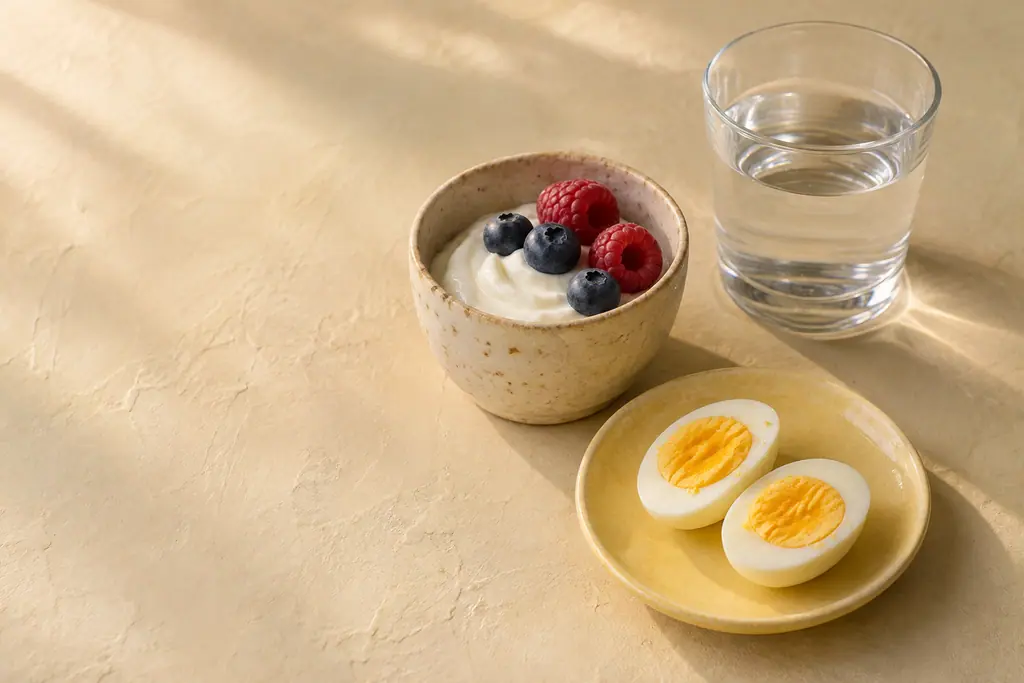
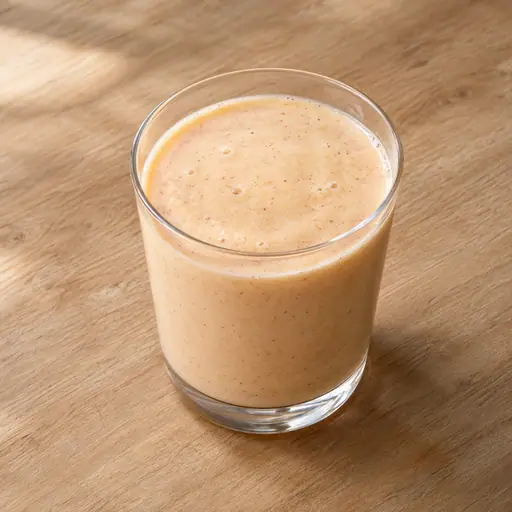
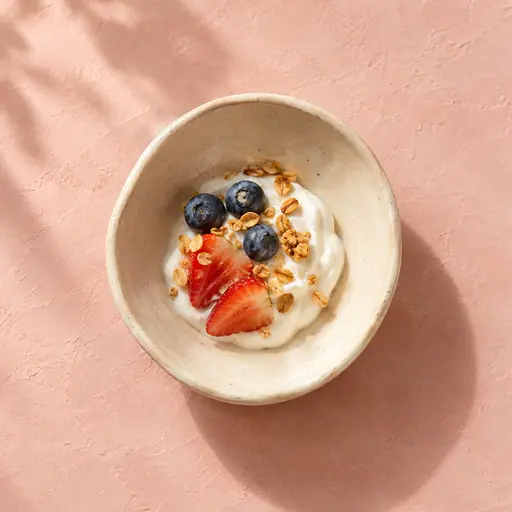
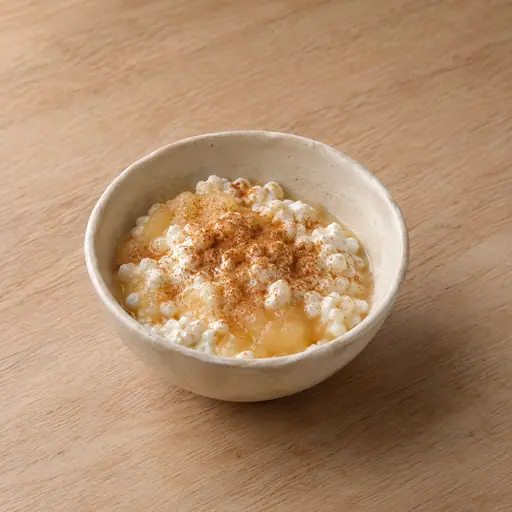
Good first-plate matches from our USDA-calculated library include Peach Kefir Breakfast Blend (21 g protein, 3 g fiber, 4 minutes), High-Protein Blueberry Greek Yogurt Bowl (19 g protein, 2 g fiber, 3 minutes), or High-Protein Apple Cinnamon Cottage Cheese Bowl (21 g protein, 1 g fiber, 3 minutes) [6]. If you love morning coffee, try having half of your gentle protein cup before your first few sips of coffee so caffeine is not landing on a completely bare stomach. (For more fast morning options, browse our GLP-1 Breakfast Ideas guide.)
Treat your first eating moment like easing onto a highway ramp: gentle, cold, and protein-first, with coffee riding alongside instead of leading the way.
A realistic 4-mini-meal day around a morning pill
Because oral GLP-1 mornings start with a delayed first bite, trying to squeeze all of your nutrition into lunch and dinner usually backfires into overfull evenings. The 2025 joint clinical advisory proposes 1.2 to 1.6 grams of protein per kilogram of reference body weight per day (or a practical benchmark of 80 to 120 grams daily for many adults) during active GLP-1 therapy, spread across small, frequent eating occasions every 3 to 4 hours [4]. The 2026 modified Delphi expert consensus similarly emphasizes structured small meals across the day and stopping as soon as you feel comfortably full [5].
Here is how four calm, USDA-calculated mini-meals from our library add up cleanly across the day once your morning wait window ends — delivering 91 grams of protein without a single oversized plate [6]:
| Eating moment | Kitchen focus | Sample plate from our library | USDA protein & fiber | Prep time |
|---|---|---|---|---|
| 1. First mini-meal (post-wait morning) | Cold, gentle, sippable or spoonable protein | Peach Kefir Breakfast Blend (or High-Protein Blueberry Greek Yogurt Bowl) | 21 g protein · 3 g fiber | 4 min (no-cook) |
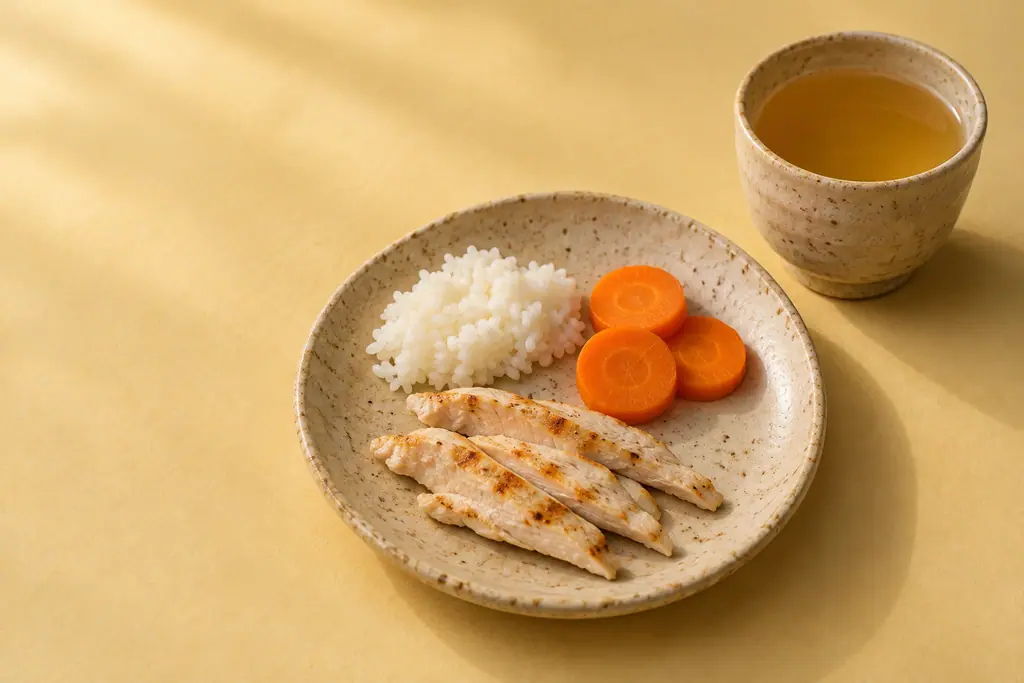
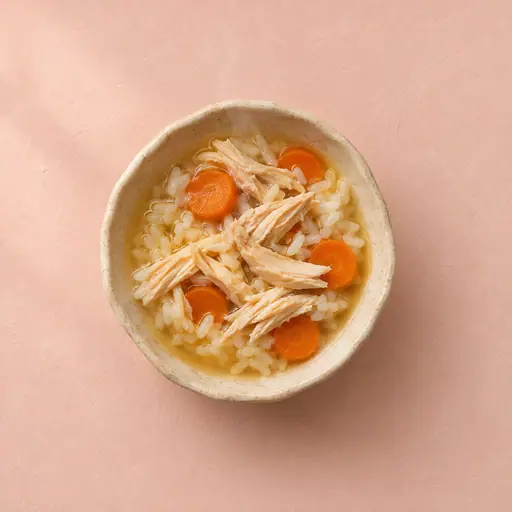
| 2. Midday mini-meal | Mild, lean warm bowl that sits lightly | Chicken & Carrot Rice Cup | 27 g protein · 1 g fiber | 7 min |
| 3. Afternoon protein anchor | Fast 3-minute cold bridge between lunch and dinner | High-Protein Apple Cinnamon Cottage Cheese Bowl | 21 g protein · 1 g fiber | 3 min (no-cook) |
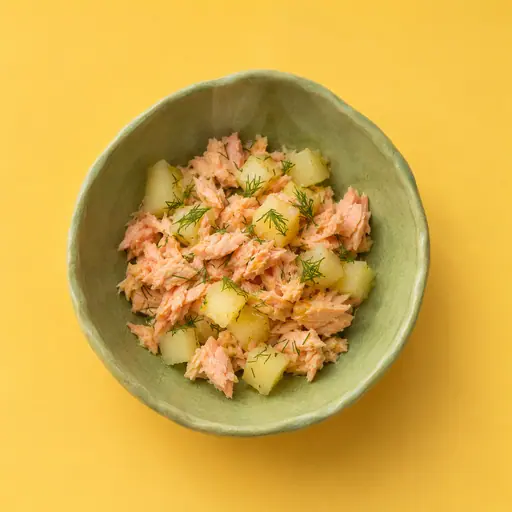
| 4. Calm evening plate | Tender, low-grease dinner finished well before bed | Salmon & Soft Potato Bowl (or Tofu & Spinach Miso Soup) | 22 g protein · 1 g fiber | 7 min |
Not sure where your own daily protein target lands? Enter your weight (and optional goal weight) into our Protein calculator — it runs privately in your browser and translates metric clinical ranges into realistic per-plate anchors. You can also generate a customized 4-plate day with automatic grocery items in our free 1-day plan.
How to stay hydrated after a limited-water morning
One subtle catch with oral GLP-1 tablets is that you start the morning with only a small amount of plain water alongside your pill [1] [2]. If you then get busy at work, it is remarkably easy to reach 2 p.m. mildly dehydrated — which can compound both nausea and constipation.
Both DailyMed oral semaglutide labels include explicit warnings regarding severe gastrointestinal adverse reactions and acute kidney injury due to volume depletion, underscoring why keeping fluids steady matters [1] [2]. The 2026 modified Delphi consensus recommends more than 2 liters of fluid per day during GLP-1 therapy, adjusted upward during heat, exercise, or stomach upset [5].
Three low-effort habits make catching up on fluids effortless once your wait window closes:
- Pair every transition with a glass: Pour a tall glass of cold water right as your wait window ends and sip it slowly alongside or just after your first mini-meal.
- Sip between plates, not in huge gulps before dinner: Large volumes of liquid right before a meal can trigger premature fullness before you get through your protein bites.
- Count gentle warm fluids: Broth-based mugs like Tofu & Spinach Miso Soup (19 g protein, 4 g fiber) and mild ginger tea help keep hydration up on cooler evenings [4] [6].
What to do on mornings when nausea shows up
Even with a smooth morning routine, queasy days still happen. Oral semaglutide labels note gastrointestinal side effects such as nausea, vomiting, diarrhea, abdominal pain, and constipation [1] [2] [3].
On days when solid food feels unappealing after your wait window opens:
- Switch to cold, zero-smell sips or spoons: Half a Peach Kefir Breakfast Blend or a few spoons of cottage cheese sit far calmer than hot eggs or toast.
- Eat half and pause: Stopping when comfortably full is a win, not a failure [5]. Return to the second half ninety minutes later.
- Avoid lying flat after eating: Staying upright helps keep stomach acid and morning nausea settled.
- Know when to call your care team: Contact your prescribing clinician promptly if you experience persistent vomiting or diarrhea, cannot keep liquids down, notice signs of dehydration (dizziness or dark urine), or develop severe, persistent abdominal pain — and never alter how you take your oral medication without medical guidance [1] [2] [3].
Next steps in your kitchen
- Calculate your personalized daily protein target in our Protein calculator and turn it into four gentle plates inside our free 1-day plan.
- Keep reading: What to Eat When You Feel Nauseous on a GLP-1, How to Get Enough Protein When You Have No Appetite, and GLP-1 Breakfast Ideas.
Try this in your kitchen
Small plates that match this guide
Six mild, low-odor plates from our library that pair smoothly with an oral GLP-1 morning and evening rhythm — all calculated from USDA FoodData Central.
- Peach Kefir Breakfast Blend
- High-Protein Blueberry Greek Yogurt Bowl
- High-Protein Apple Cinnamon Cottage Cheese Bowl
- Chicken & Carrot Rice Cup For the rest of the family: add a side of peas and larger bowls of rice.
- Salmon & Soft Potato Bowl For the rest of the family: add roasted potatoes and a side salad.
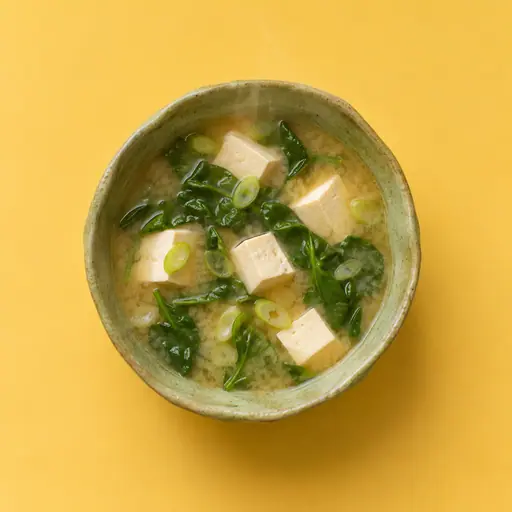
- Tofu & Spinach Miso Soup For the rest of the family: ladle into four bowls and serve with steamed rice.
Macros are calculated by code from USDA FoodData Central.
Common questions
Can I drink coffee right after taking an oral GLP-1 pill like Rybelsus or oral Wegovy?
No — FDA prescribing labels for oral semaglutide tablets (including Rybelsus and oral Wegovy) direct taking the tablet on an empty stomach with plain water only and waiting before eating, drinking any other beverages, or taking other oral medications. Coffee, tea, milk, or juice taken too soon can reduce absorption. Follow your prescription label and ask your pharmacist how to time your morning coffee and other daily medications.
What is the easiest first food to eat once my morning wait window is over?
Cold, soft, low-fat protein foods usually sit best after fasting. A chilled kefir blend, a single-serve cup of plain Greek yogurt with berries, or a small bowl of cottage cheese with applesauce gives you 19 to 22 grams of protein with almost zero cooking odor or grease.
Does an oral GLP-1 meal plan need different protein goals than an injectable GLP-1?
Your daily nutrition goals focus on preserving lean muscle and staying hydrated regardless of whether your GLP-1 medication is oral or injectable. Clinical advisories propose 1.2 to 1.6 g/kg of reference body weight per day (or roughly 80 to 120 grams daily for many adults) split into small, frequent meals — confirm your personal range with your care team.
What if I wake up with zero hunger after my morning wait window?
Skipping breakfast completely can backfire into stronger nausea later in the morning. The 2025 joint clinical advisory notes that prolonged stretches without eating often worsen nausea, so try a small sippable blend or half a cup of soft dairy once your label's wait window ends, and save the rest for two hours later.
How do I fit enough water into my day when I have to limit water with my morning pill?
Because oral GLP-1 labels restrict how much plain water you take with the tablet itself, shift your main hydration to the hours after your wait window opens. Keep a refillable bottle nearby and take small, steady sips between mini-meals to work toward more than 2 liters of total daily fluid.
Sources
Every health, nutrition, and food-safety claim in this guide links to a published advisory, peer-reviewed paper, or public agency document.
- WEGOVY (semaglutide) injection and tablets — Prescribing Information — DailyMed, National Library of Medicine (FDA Label) (2026)
- RYBELSUS and OZEMPIC (oral semaglutide) tablets — Prescribing Information — DailyMed, National Library of Medicine (FDA Label) (2025)
- Semaglutide (Oral Route) Drug Information — MedlinePlus, National Library of Medicine (NIH) (2026)
- Nutritional priorities to support GLP-1 therapy for obesity: A joint advisory from the American College of Lifestyle Medicine, the American Society for Nutrition, the Obesity Medicine Association, and The Obesity Society — The American Journal of Clinical Nutrition / Obesity Pillars (2025)
- Nutritional and lifestyle supportive care recommendations for management of obesity with GLP-1-based therapies: An expert consensus statement using a modified Delphi approach — Obesity Pillars (2026)
- USDA FoodData Central — USDA Agricultural Research Service (2026)